





FMS 2026: Exclusive Interview with KS Pua, CEO and Cofounder, Phison Electronics
During FMS 2026 following spectacular financial results
By Philippe Nicolas | August 5, 2026 at 2:02 pm KS Pua is cofounder and CEO of Phison Electronics, a company he launched in November 2000 with four other engineering schoolmates from the Institute of Electrical and Control Engineering at National Chiao Tung University (NCTU) in Hsinchu, Taiwan. Phison HQ is located in Taiwan. He received his undergraduate education in electrical control engineering at NCTU in 1999.
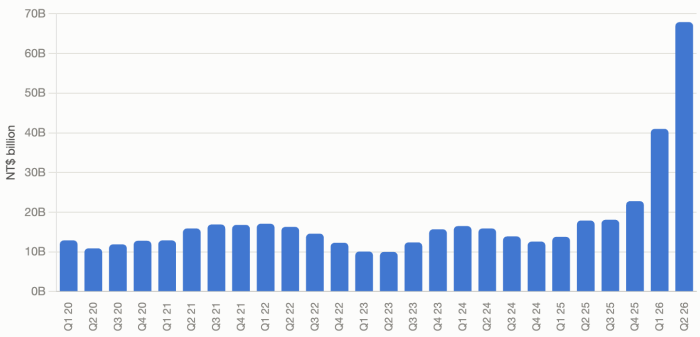
StorageNewsletter: KS Pua, glad we have the opportunity to speak together during FMS 2026. Phison reported exceptional Q2 2026 results, with revenue reaching NT$67.9 billion, up 66% sequentially and 280% year over year. In addition, first-half revenue surpassed the NT$100 billion milestone for the first time in the company’s history. What are the key factors behind this remarkable performance, and which strategic decisions made over the past few years have contributed most to this sustained growth?
KS Pua: These results come from decisions made years earlier, rather than the last quarter alone. We continued investing through the downturn in controllers, firmware, enterprise storage, automotive, industrial, gaming and AI. When demand strengthened, we already had the products, customer programs and supplier relationships in place. In early 2024, with the introduction of Pascari, our line of purpose-built storage solutions, we were well positioned to weather those NAND cycles and incoming demand.
The market also changed. NAND demand is no longer driven mainly by consumer devices. AI infrastructure, enterprise systems, vehicles and industrial applications all need more capacity and more reliable data movement. More than 80% of our revenue now comes from these higher-value markets. Pricing contributed, but pricing was not the foundation. The foundation was engineering discipline, a broader product mix and the decision to keep investing when conditions were difficult.
How is your revenue distributed geographically? Could you share the relative contribution of North America, Europe, and Asia, and discuss the growth dynamics you are seeing across these regions? Same thing among product lines?
The US is our largest revenue region, and it’s a major driver of our AI Ecosystem Module segment, having accounted for nearly 40% of our revenue in Q1 2026. Asia remains a major part of our business because it is the center of the global semiconductor, PC and electronics supply chain. Europe is quickly growing in enterprise, automotive, industrial, embedded and other long-lifecycle applications.
The larger change is our business mix. Phison is no longer primarily a consumer-storage company, especially with the introduction of Pascari. Today, our business spans controllers, customized modules, automotive and industrial systems, enterprise SSDs and AI infrastructure. Naturally, we are seeing strong growth in enterprise and AI, but other segments are steady, and are even growing as a result of the first two. That diversity gives us more ways to serve customers and makes the company less dependent on any single market cycle.
Several years ago, Phison made the strategic decision to expand beyond SSD controllers and launch its own enterprise SSD portfolio with Pascari. What motivated that move, and what differentiates Pascari products in such a competitive market? Why do you believe they have gained strong customer adoption and industry recognition?
The move into enterprise was a natural evolution. We’ve spent over two decades building controller and firmware expertise, which are the hardest part of storage. Extending that into a full enterprise SSD line under the Pascari brand let us bring that engineering depth directly to data center customers.
What differentiates Pascari comes down to two things:
First, ownership, because we develop nearly all of our IP and firmware in-house, from the controller up. That vertical control means we’re not assembling someone else’s building blocks. We can tune performance, endurance, and features at the deepest level.
Second, flexibility, because we own the full stack, we’re the most willing and able to customize. For enterprise customers, that turns a vendor relationship into a true partnership, meaning we build to their workload, not just to a spec sheet.
At the end of the day, enterprise storage is built on trust. Customers care about predictable performance, endurance, power efficiency, security and long-term support. Those capabilities don’t happen overnight. We’ve consistently invested about 20% of our revenue in R&D because that’s what it takes to build products customers can rely on. Our independence from any single NAND supplier also gives us the flexibility to optimize around each workload rather than one media strategy.
As the market enters a tighter supply cycle, more customers are recognizing the value of that approach. Pascari isn’t a new direction for Phison. It’s the natural result of the engineering foundation we’ve been building for many years. It allows us to offer a high-value, turnkey solution in a now high-demand market.
The memory and storage industry has experienced an unprecedented NAND pricing surge over the past several quarters. Despite these market conditions, Phison has continued to deliver impressive growth. How did you manage relationships with NAND suppliers, secure sufficient supply, and anticipate demand to support this trajectory?
You cannot build supply relationships when a shortage begins. They are built over many years. We’ve worked with the major NAND suppliers through both strong and weak markets, continuing to invest and support customers even when demand was soft. NAND makers remember who stayed at the table when prices collapsed, and we work together for whatever market may come. That’s why, when supply tightens, the technical roadmaps, qualifications, and allocation discussions are already in place.
Our relationships are also different because they’re two-way, which is a rarity in this industry. We depend on NAND suppliers for media, but they also rely on Phison’s controllers, firmware, and turnkey solutions across multiple markets. When your supplier is also your customer, the relationship becomes a partnership rather than a transaction.
Phison’s independence from any single NAND supplier gives us another advantage. We can choose the right media for each workload instead of forcing customers into one solution. In a shortage, that multi-sourcing becomes a supply advantage, not just a design advantage.
Our mix of verticals also helps. We see demand across client, gaming, automotive, industrial, embedded, enterprise and AI markets. That does not remove cycle risk, but it gives us a wider view of where demand is moving.
AI has fundamentally reshaped the memory and storage landscape. China is rapidly expanding its capabilities with players such as CXMT, whose recent IPO attracted significant attention, while traditional memory vendors are increasingly focusing on high-margin HBM products. How has the market responded to Phison’s Pascari aiDAPTIV hybrid memory-storage architecture, and what feedback are you receiving from partners and enterprise customers?
Yes, a lot of industry players are looking toward building for HBM, which is still needed. HBM gives AI speed, while Pascari aiDAPTIV gives AI scale. They’re not alternatives. They’re complementary and the goal isn’t to replace HBM or DRAM. It’s to reserve it for the data that truly needs it and use the rest of the memory hierarchy more intelligently. So when people ask whether flash can replace HBM. I think that’s the wrong question. The real question is how to make limited HBM go further. That’s the problem we’re solving.
AI models are growing faster than affordable memory capacity, and Pascari aiDAPTIV offers a solve. It adds flash as another managed tier for eligible AI data. The goal is to use GPU memory, system memory and flash according to what each does best. That can help customers run larger models, support longer context, and keep more workloads local without putting everything into scarce, expensive memory.
The feedback has also been clear that customers do not want another isolated storage product. They want an architecture that works with the CPUs, GPUs, DRAM, and software they already use. That is how we think about aiDAPTIV, not as one drive, but as a way to make the full memory hierarchy work more efficiently.
At Computex, Phison announced a partnership with Intel focused on AI PCs. Could you elaborate on this collaboration, its objectives, and what customers should expect from this initiative?
The collaboration is about expanding what an AI PC can run locally. By combining Intel-powered AI PC platforms with aiDAPTIV, we can evaluate how flash-backed memory extension supports larger models, longer-context inference, KV-cache reuse and agentic workloads on practical system configurations. The value is not that every system should use the same design, it is giving OEMs and developers another option for balancing performance, memory capacity, power, privacy and cost.
Local AI will not replace the cloud. But more workloads will need to operate closer to the user and closer to the data. That requires a more flexible memory architecture, and this partnership is an important step in proving what that architecture can support. This means that customers can realize the benefit of using larger AI models that can lead to their next revenue-generating idea, all supported locally on a PC that is using its critical components for the best ROI.
Beyond aiDAPTIV and the Intel partnership, what is Phison’s broader AI strategy? How does the Phison AI Data Platform fit into that vision, and how does it differentiate itself from the many “AI platforms” currently being promoted across the industry?
AI cannot be solved by compute alone. The system must also store, move, retrieve, secure and manage the data around the model. Our strategy follows that full data path. aiDAPTIV extends effective memory while Pascari supports enterprise and data-center storage. Our AI PC work brings larger models and longer context to local systems. The AI Data Platform and HCI capabilities help customers integrate infrastructure, scheduling, software and applications.
What gives Phison a different starting point is our control of the data layer. We understand controllers, firmware, NAND behavior, storage systems and data movement and we are building upward from that foundation. The goal is to help enterprises deploy AI infrastructure they can afford, operate and control.
The race toward ultra-high-capacity enterprise SSDs continues to accelerate, with the long-term objective of enabling an exabyte of flash storage within a single rack. Phison already offers the 245TB Pascari D206V. What is your roadmap toward 500TB-class SSDs and eventually even higher capacities?
The 245.76TB D206V shows the direction, but capacity alone is not the objective. At higher density, every part of the system becomes more important including media reliability, firmware, error correction, metadata, power, cooling, recovery, qualification and serviceability. Doubling capacity is not simply adding more NAND.
We haven’t yet shared a final specification for a 500TB product yet, but what I can say is that our architecture is being developed for continued capacity scaling, and we are also thinking beyond the drive. Exabyte-scale racks will depend on storage density, networking, cooling, data protection and intelligent placement of data working together. It won’t be about who can print the largest number on a label, but who can make that capacity useful and reliable.
How do you view today’s competitive landscape, both in SSD controllers and client, industry and enterprise SSDs? Are there particular competitors, regional players or specific directions that you believe are changing the dynamics of the market?
Competition is increasing, but the market is also becoming more specialized. Controllers, client SSDs, automotive, industrial and enterprise storage each require different strengths. Scale matters, but so do firmware quality, qualification discipline, power efficiency, security and long-term support.
In enterprise, we compete with vertically integrated NAND suppliers, established storage companies, and new regional players. Our advantage is independence, ownership of the controller and firmware stack and the ability to work closely with customers across different NAND technologies.
The bigger directional change we see is that AI is shifting competition from individual components to system architecture. Memory hierarchy, KV cache, vector retrieval, data movement and energy efficiency now matter together. The standout companies will not be defined by one specification, rather by how well the whole system works.
With strong revenue growth, an expanding product portfolio, and a proven strategy, has Phison evolved its go-to-market approach? Have you introduced new sales channels, strategic partnerships, or routes to market to support the company’s next phase of growth?
Yes, because the customer problem has changed. Our controller and turnkey businesses remain important, but enterprise and AI customers need deeper engagement. We’re leaning into workload qualification, proof-of-concept support, firmware collaboration, lifecycle planning and integration with the rest of the system. That means working more directly with enterprise OEMs, system integrators, data-center customers, distributors and platform partners.
It also means building stronger relationships across CPU, GPU, server, and software ecosystems. We are not replacing our traditional model. We are adding a solution-oriented model around it. As the technology moves closer to the customer’s architecture, our engagement has to move closer as well.
Looking ahead over the next 18 to 24 months, what should customers, partners, and the industry expect from Phison? What will be the company’s top strategic priorities, technology investments, and growth opportunities?
We will continue investing in controller technology, firmware, power efficiency, security and reliability across client, gaming, automotive, industrial and enterprise markets. We will also continue developing Pascari (including aiDAPTIV) and the AI Data Platform around real customer workloads.
AI systems need a better way to store, move, secure and access data, which means memory extension, KV-cache management, higher-capacity enterprise storage and private AI infrastructure are all parts of that problem. We should be careful not to overstate what any single technology can do. The opportunity is to improve the complete data path, step-by-step. That is where Phison has built its experience, and that is where we will continue to focus.
Comments
The financial results reported by Phison are particularly impressive, as illustrated by the growth curve below. More importantly, they reflect a series of strategic decisions made several years ago that are now delivering tangible results. The revenue trajectory over the past four quarters clearly demonstrates that these long-term investments and choices have paid off.
The company is also well positioned to address demand from a broad range of markets. The SSD industry is no longer driven primarily by the consumer segment as it once was. AI has fundamentally reshaped demand, creating new opportunities across enterprise infrastructure, hyperscale deployments, and edge computing, with a significant impact across the entire production and supply chain.
Another key milestone was the introduction of the Phison Pascari SSD product family. This move represented a major strategic diversification beyond Phison's traditional controller business, enabling the company to deliver complete enterprise SSD solutions. The Pascari portfolio has been well received by customers and widely adopted, reinforcing Phison's position in the rapidly expanding AI and enterprise storage markets.
We'll have another chance to meet Phison during the coming 70th edition of The IT Press Tour in October in Silicon Valley.







 Subscribe to our free daily newsletter