








Pliops Launches Extreme Data Processor to Multiply Data-Intensive Application Performance and Slash Data Center Infrastructure Costs
Features drive fail-protected performance of up to 3.2 million random read IO/s and 1.2 million random write IO/s, and ability to store capacities of up to 128TB of protected data on 64TB of SSDs
This is a Press Release edited by StorageNewsletter.com on July 28, 2021 at 2:02 pmThe data center revolution is here, and it’s being delivered by a new processor that simplifies how data is processed and stored.
In a move that sets a benchmark for data center scaling and efficiency, data solutions Pliops Ltd. announced the launch and commercial availability of its Extreme Data Processor (XDP).

Taking the spirit of Moore’s Law to its next chapter, the company’s XDP exponentially increases performance, reliability, capacity, and efficiency – multiplying the effectiveness of data center infrastructure investments. Providing new levels of processing power and storage scalability for relational, NoSQL and in-memory databases, analytics, AI/ML, 5G, IoT, and other data intensive applications and platforms, the XDP changes the landscape for what is possible.

Rearchitecting world of compute
Legacy approaches fall short since the need for storage capacity – and the computational requirements for processing it – is accelerating. Adding more (and more) standard servers and drives has historically been the only answer, but there is a better way – one that doesn’t result in expanded footprints, massive overprovisioning and increased costs. As the success of GPUs has proven, a purpose-built processor that accelerates critical workloads is the solution. The firm’s XDP eliminates major redundancies and accelerates performance, enabling data center infrastructures to scale more efficiently. It combines multiple fundamental data and storage technologies into one device, multiplying their benefits.
“The world has been transformed by data, and Pliops is keeping that transformation going,” according to Uri Beitler, founder and CEO. “Data is one of the most powerful tools we have to make the world a better place for ourselves and our families,”
He continued: “However, the data needs of today and tomorrow are not compatible with the data center architecture of yesterday. As data grows exponentially, our ability to handle the data must grow too. What’s needed is a revolutionary data processor – one that doesn’t take a revolution to deploy at scale. That’s exactly what we have delivered with the XDP: a solution with the capacity to solve the data challenges of today and tomorrow and sustain the momentum of data-powered innovation.“
The XDP delivers value for today’s popular applications by achieving peak productivity and making way for new applications and deployment models. By solving current data efficiency challenges, it expands the potential of existing architectures. This allows infrastructure architects, product managers and executives to scale for adoption of the modern applications needed to compete in today’s world – leveraging the infrastructure they already have. With chip shortages looming, getting the most out of existing infrastructures becomes even more important.
Key benefits:
-
Performance: Eliminates bottlenecks, latency and server sprawl that cost time, resources and business opportunities. Delivers unprecedented performance gains up to 10X higher for databases, analytics, AI/ML, and more.
-
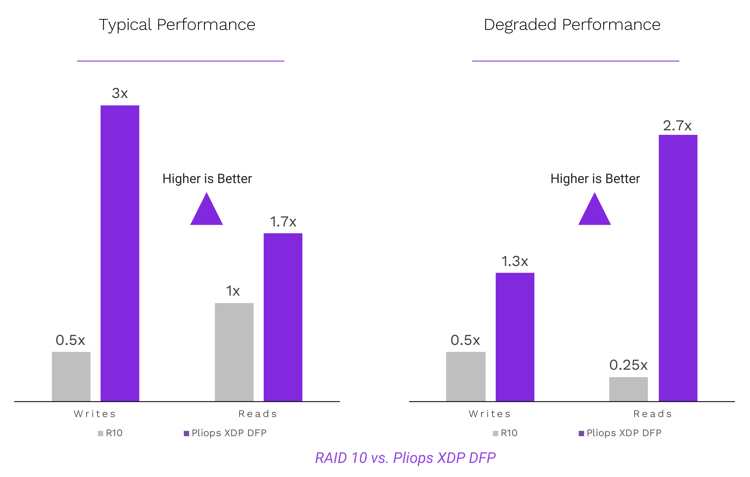
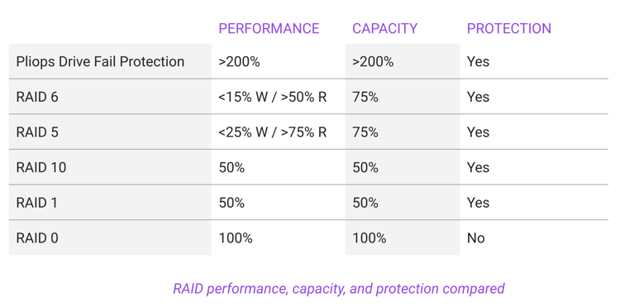
Reliability: Drive Fail Protection enables users to maintain constant data availability and deliver on stringent SLAs, with no hit to performance.
-
Capacity: In-line compression and other data-management technologies provide up to 6X space savings.
-
Efficiency: Easy to deploy, single solution for every workload, optimizing data center infrastructure footprints and slashing costs.
Performance and low infrastructure costs – delivered
By scaling across compute, memory, networking, and storage, the company’s XDP multiplies the effectiveness of data center infrastructure investments:
-
10x application-level performance
-
5x cost savings
-
6x capacity
The company has been recognized as a ‘Sample Vendor in the Functional Accelerator Card’ (FAC) category of the Gartner Hype Cycle for Enterprise Networking. According to Gartner, “The FACs enable more cost-efficient data center environments while improving performance.“

Performance and availability:
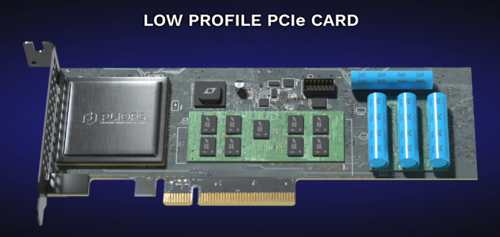
The XDP features drive fail-protected performance of up to 3.2 million random read IO/s and 1.2 million random write IO/s, and the ability to store capacities of up to 128TB of protected data on 64TB of SSDs. In addition, the processor supports full atomic writes enabling more efficient database operation. XDP supports all data center SSDs and is delivered on an easy-to-deploy, low-profile PCIe card. Installation is plug-and-play using a standard block interface requiring no application changes or a native KV interface for optimal performance.
XDP is available from multiple distributors and server OEMs.
Comments
Pressure on data center is real with a volume of data always in hyper growth mode and demand for even more processing of them is getting a must now. It was confirmed by several industry initiatives around Computational Storage (CS) and Data Processing Unit (DPU) that offer a new approach to such requirements. Hyperscalers, superscalers and enterprises are now the adopters of this offload schema iterating as a new phase of disaggregated infrastructure.
Such computing model introduces a radically new approach for data processing decoupled from the CPU that clearly deliver a new level of QoS in multiple dimensions: performance, reliability, capacity and globally efficiency with TCO in mind. It clearly surfs also on the AI/ML based data intensive needs promoted by GPUs. DPU closes the loop on this dedicated optimized data processing farm with specific computing zones built and aligned with some special requirements.
Such model presents the capability to build interesting configurations as described in the image below:
- DAS or storage server
- Single NVMe-oF JBOF
- Multiple NVMe-oF JBOF
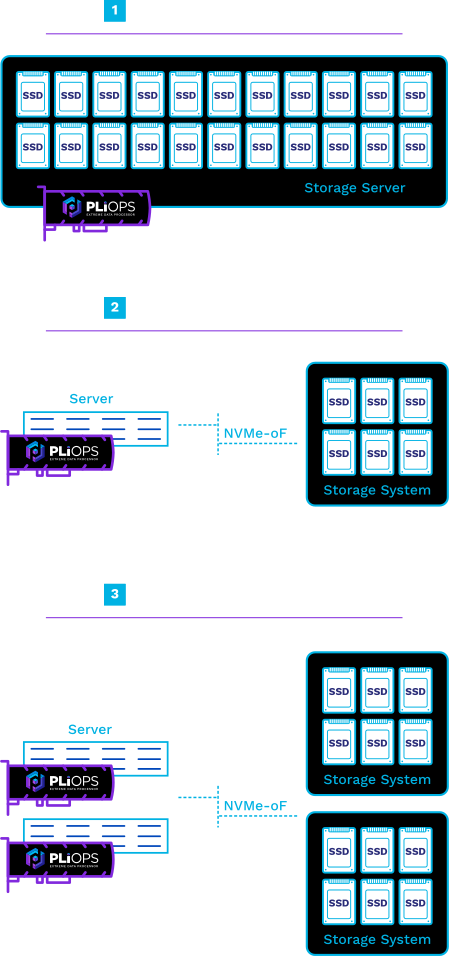
As the market chose for around a decade to speak about SDS, such offload engines break a bit the universal standard approach as finally users need to consider some specific card inside a commodity server. Does a commodity server with such card still provide a SDS model? It is a question that for sure divides the industry.
From a pure storage and data management aspects, this processing model really helps and reminds all of us some past offerings where specific card were embedded in array. At the same time, we saw some cards with RAID and other data services capabilities appeared, we all have names in mind. RAID, erasure coding, compression, de-dupe, encryption ... are pretty common but we see some specific directions around databases, data manipulation ... upper in the stack, for some players wishing to address vertical IT or industry needs.
We also notice the capability for some products to establish a network between all cards building a specific processing cloud or network between the classic CPU layer and the IP network and storage domain. This approach produces a very powerful distributed data processing that can feed classic or AI/ML based applications requirements.
The go-to-market strategy will be key for the adoption and OEM model seems to be one of the obvious path already chosen by several vendors. We remember choosing a HBA in the past for SAN was not easy, promoting the value of it even worse, so we understand that the value chain is key here with solutions built around such approaches and promoted, distributed and even branded by some IT giants. Classic distribution is also a model chosen by some players with established resellers networks with deep expertise, it will certainly help to penetrate large accounts.
The market seems to be very dynamic with dozens of players active in FPGA, ASIC, etc. There are especially Fungible, Nebulon, Kalray, Pensando, Nyriad, Graid, now Pliops or players in the CS domain with ScaleFlux and NGD Systems. There is also the presence of giants like Broadcom, Marvell, Kioxia, Intel, AMD with Xilinx acquisition for instance as investors, acquirers or even developers as they anticipate a new el dorado for the business coming fast. PCIe being the preferred model, the market elaborates a lot of expectations for PCIe next generation end even CXL.







 Subscribe to our free daily newsletter