









Cervoz Industrial SSD Tackles Overheating With Solutions
Dynamic thermal throttling, graphene padding, heatsink kit, and FlashMonitor software
This is a Press Release edited by StorageNewsletter.com on July 23, 2021 at 1:03 pmOverheating is a problem that any machine or device powered by electricity can face.

When a storage module overheats, it may start to malfunction. If overheating continues, it could cause the module to crash and threaten data integrity. Ultimately, the problem could reduce the device’s expected lifespan and render it useless and in need of replacing.
Cervoz Technology Co., Ltd. has engineered solutions to overheating to go along with its modules. Here are its 3 main solutions for thermal management and overheating protection:
Dynamic Thermal Throttling
On the firmware front, the company offers a feature known as ‘Dynamic Thermal Throttling’ for its flash products. This mechanism prevents the module from overheating due to large volumes of data write-in in a short period of time. In cases when the module heats up to a temperature cap, the function automatically slows down performance and thus drops temperature before the module overheats.
This feature will induce cooling until the device returns to a stable temperature. Once the temperature has decreased to a previously determined acceptable level, transfer speed will return to its optimum level.
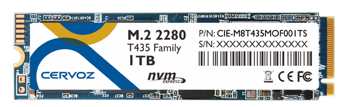
M.2 PCIe Heat Dissipation Solution
On the hardware front, the firm provides 2 heat dissipation solutions for its M.2 PCIe modules. Since these modules are known for their fast data-processing capabilities, they are most prone to overheating.
For the standard temperature M.2 module, we offer a graphene padding that is sufficient for heat dissipation in a typical room-temperature setting. Meanwhile, for the wide temperature M.2 module, the firm’s heatsink kit is designed to help with heat dissipation under extreme temperatures (-40˚C to 85˚C). The fin design has been proven to accelerate heat dissipation and thus maintain stable data transfer.
The tests on the company’s heatsink found that it can reduce operating temperatures by up to 15˚C compared to that of devices operating without it.
FlashMonitor

On the software front, the company presents the proprietary FlashMonitor, free to download with the purchase of any of its storage products. It shows in real time how the firm’s storage modules are doing, with temperature being one of the data it tracks.
In the ‘Tool’ tab, users can set up the system to send email and pop-up alerts when the module’s temperature reaches a pre-set threshold. This automatic, real-time alert keeps users informed of how the device is doing and whether it needs to be powered off to cool down.








 Subscribe to our free daily newsletter