








AMD AAI 2026: 6th Gen AMD EPYC Server CPUs Power the Agentic Data Center
AMD EPYC 9006 Series server CPUs deliver purpose-built solutions for agentic AI, enterprise and HPC workloads
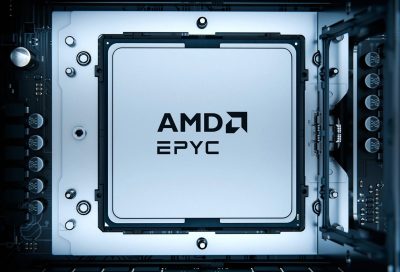
This is a Press Release edited by StorageNewsletter.com on July 27, 2026 at 2:01 pmWhat’s the News? Highlighted at Advancing AI 2026, AMD EPYC 9006 Series server CPUs provide a workload-optimized portfolio of solutions for agentic AI, cloud, as well as general purpose and HPC. For agentic AI, the family of processors addresses three CPU-dependent jobs in agentic workflows: running agents, feeding accelerators and powering the enterprise services agents use.
Why It Matters? Agentic AI is reshaping how enterprise infrastructure is used and designed. It is transforming AI from systems that simply answer questions into systems that act, plan, call tools, write and execute code, and reason over enterprise data. This shift demands significantly more compute than GPU acceleration alone. Agentic AI depends on CPU-powered infrastructure to run agents, coordinate work around the model, connect to enterprise data and services, and keep accelerators fed across increasingly complex AI systems. Matching the right CPU to each stage of the agentic workflow can improve throughput, utilization and efficiency across the data center.
What is the Role of AMD? “AMD EPYC processors have set the standard for leadership data center performance, efficiency and customer value, and with 6th Gen AMD EPYC server CPUs, that standard moves even higher. As agentic AI reshapes how enterprise infrastructure is designed and deployed, EPYC is evolving with our customers once again. 6th Gen AMD EPYC delivers workload-optimized compute for the full spectrum of modern data center needs; from running more agents and feeding GPUs across rack-scale AI infrastructure to powering the business-critical applications and services organizations rely on every day,” said Dan McNamara, SVP and GM, compute and enterprise AI, AMD.
How is the Modern Data Center Changing? The shape of the data center is changing into a three-tier agentic architecture, with each tier creating distinct CPU demand. Three CPU jobs anchor the agentic workflow and modern enterprise infrastructure: agent sandbox execution, AI host nodes and general-purpose servers.
The agent sandbox CPU runs and coordinates agents, executes spawned code and tasks, manages memory and system state, and handles I/O outside the GPU. The AI host node CPU feeds GPUs across AI infrastructure like the AMD Helios rackscale solution. Lastly, the general-purpose CPU runs day-to-day business critical applications like databases, storage, application services and AI-support workloads.
What is the AMD EPYC 9006 Series? AMD EPYC 9006 Series server CPUs are the industry’s broadest server CPU portfolio for agentic AI built to match the right processor to the right job. The lineup includes purpose-built CPUs for running agents, feeding GPUs, powering enterprise workloads and accelerating HPC and technical computing.
- AMD EPYC 9006 SP7: Built for high-density agent sandbox execution with up to 256 cores and 512 threads, it helps run more agents per watt, per dollar and per rack. In high-frequency configurations, it also serves as an AI host node, with up to 5GHz frequency, PCIe Gen 6 and impressive CPU-to-GPU improvement delivering the most agents per watt, per dollar, and per rack
- AMD EPYC 9006 SP8: The processor is built for efficient, right-sized performance across critical enterprise workloads and agent sandbox execution where efficiency is top priority. With flexible 8- to 128-core options and low-power designs, it supports everything from edge sites and power-constrained racks to smaller clusters and general-purpose servers engineered to deliver leadership performance per system dollar
- AMD EPYC 9006X SP7: The processor is built for HPC, technical computing and data-intensive workloads that benefit from high cache and memory bandwidth. With some variants reaching frequencies up to 5.15GHz frequencies and 3x the L3 cache per core of AMD EPYC 9006 SP7, it helps accelerate simulation, modeling, large-scale analytics, retrieval, in-memory analytics and other memory-sensitive work
- AMD EPYC 9006 LP: Formerly codenamed “Verano”, the AMD EPYC 9006 LP processor is purpose-built as an AI host node CPU for next-generation rack-scale AI systems. The processor, leveraging LPDDR memory and up to 5GHz frequency, helps keep accelerators fed across dense, accelerator-rich racks allowing system utilization to scale as deployments grow from single nodes to AI factories
What’s the AMD Advantage? One architecture and multiple design points let customers compose the agentic data center to the work instead of stretching one CPU across every job. The portfolio shares a common software ecosystem and a hardened security foundation, giving customers the flexibility to choose density for agents, frequency and bandwidth for GPUs, high cache for technical workloads and efficiency for enterprise services.








 Subscribe to our free daily newsletter