








Recap RAISE Summit 2026
A dense and prestigious 3rd edition, pretty unique in its format
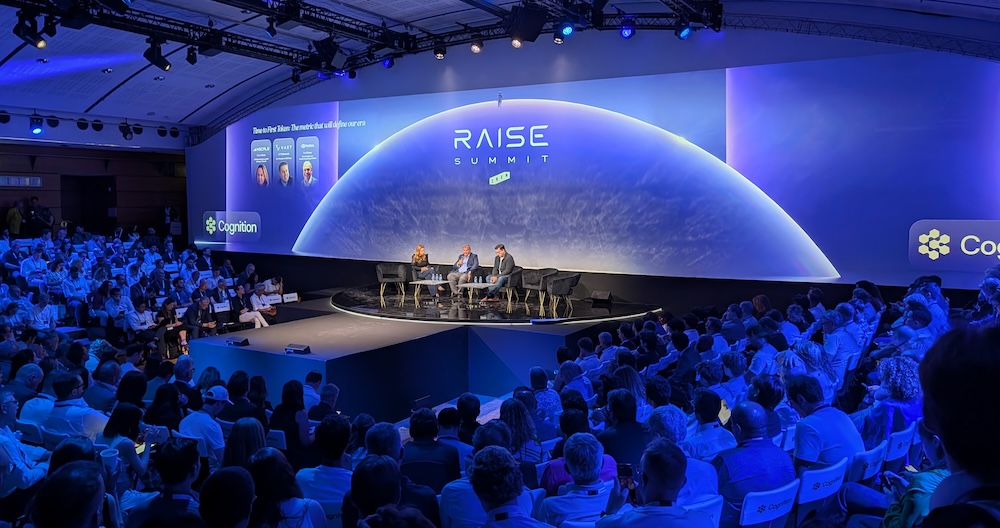
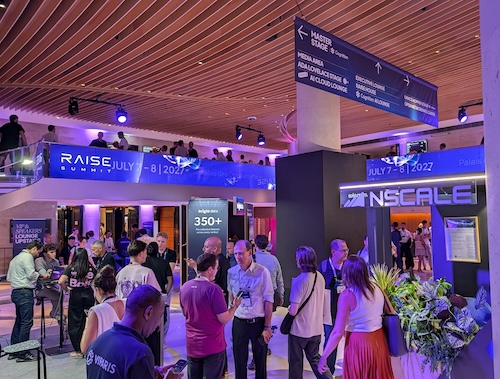
By Philippe Nicolas | July 17, 2026 at 2:02 pmThe 3rd edition of the RAISE Summit 2026 in Paris once again proved to be an impressive event. Its scale was remarkable in every respect. Organizers reported approximately 9,000 attendees from around the world, while the number and quality of exhibitors, the profile of participants, and the conference program all reinforced the event’s growing reputation.
The main drawback was undoubtedly the venue. Although prestigious and ideally located in the heart of Paris, it was clearly too small for an event of this size. Conference rooms and exhibition halls quickly became overcrowded, making it difficult to navigate. At the same time, side events such as Machina, the CxO Summit, the Hackathon, the Gala Dinner, and the AI Security Summit gave the conference a distinctive character and broadened its appeal. Another disappointment was the format of the conference sessions. With presentations limited to just 20 minutes, discussions often felt rushed, a choice that may benefit the organizers’ scheduling but certainly not the audience.
As expected, AI dominated every aspect of the summit. However, it was sometimes surprising to see exhibitors from completely different industries placed side by side with no apparent connection other than their use or development of AI. The exhibition layout could certainly be improved. Moving from an infrastructure vendor to a financial services company and then having to change halls to find related technology providers made the experience less intuitive than it could have been.
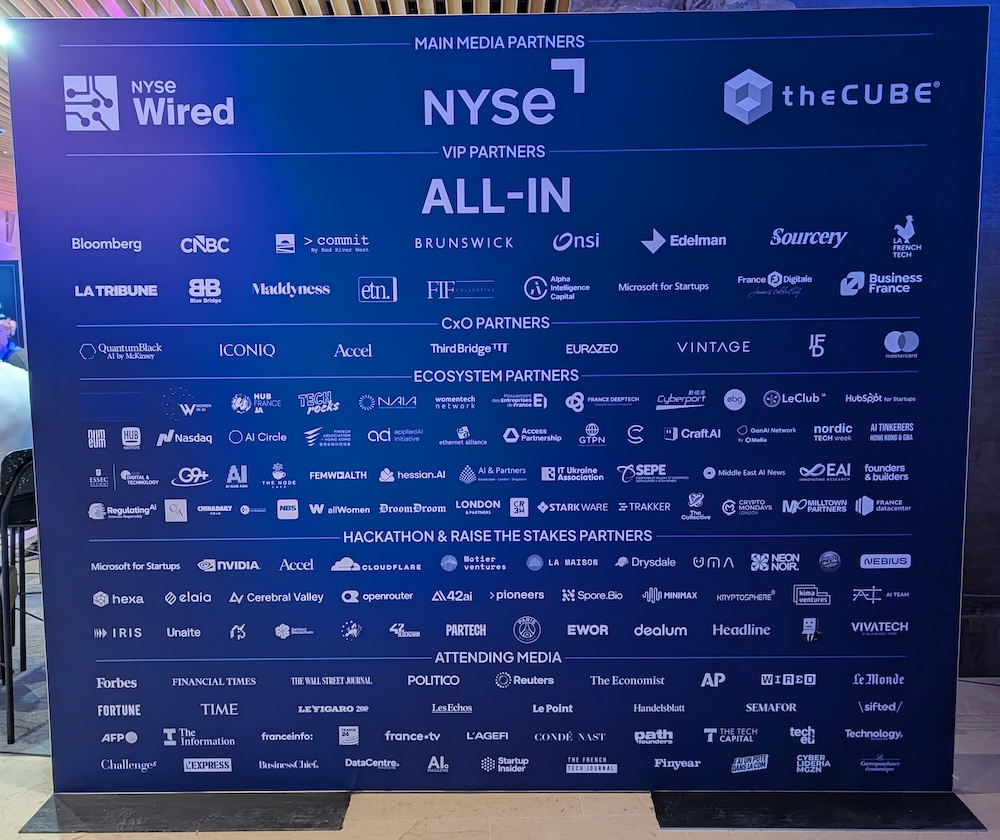
Although many major companies were represented, not all of them chose to exhibit. Several preferred participating in roundtables or fireside chats instead of maintaining a booth. Notable examples included Dell, HPE, Oracle, Intel, IBM, Groq, Anthropic, Lambda Labs, and Perplexity. Storage and infrastructure vendors were also surprisingly absent except AMD, DDN, Hammerspace, Huawei, Lenovo, Mirantis, NetApp, Rubrik, Scality, Supermicro, Vast Data (no booth) or Weka, with virtually no SSD or HDD manufacturers exhibiting. Many neoclouds players had a booth like Coreweave, Crusoe, Iren, Nebius, Nscale, Vultr or Alibaba Cloud, Digital Realty or even Blackblaze. For some of them, we wonder why they were in Paris. Of course new AI hardware vendors took the stage like Cerebras, Furiosa AI, Rebellions or SambaNova to name a few. Given the growing emphasis on digital sovereignty, we also expected a stronger presence from European technology companies, but their participation remained limited.
Click to enlarge
As many observers describe AI as the driving force behind the fourth industrial revolution, this year’s summit highlighted several major trends that deserve attention:
- Investment and market dynamics: investors continue to pour capital into AI, fueling a major shift from traditional software companies. Much like the dot-com boom, today’s AI wave has created powerful ecosystems, although some analysts increasingly question whether the industry is entering a speculative bubble
- Sovereignty: the concept means different things to different stakeholders, but it extends far beyond data residency. Security and privacy have become two of its most important dimensions
- Inference: unsurprisingly, inference emerged as one of the defining themes of the summit, reflecting the industry’s growing focus on deploying AI efficiently at scale.
- Open-source AI: open models are increasingly viewed as a way to avoid vendor lock-in while fostering innovation. For Europe in particular, open-source software and services may represent the most realistic path toward technological independence in the absence of global hyperscale AI champions
- The rise of neoclouds: these companies have evolved well beyond simple GPU rental providers. They are rapidly expanding their portfolios and are becoming key players in AI infrastructure
- AI coding tools and agentic AI: solutions such as Cursor illustrate the momentum behind AI-assisted software development. Enterprises are increasingly looking to these technologies to unlock new levels of automation and productivity
- Token consumption and model optimization: the industry still has significant work to do in educating customers about inference costs, token usage, and model optimization
- ROI: classic but it remains one of the most frequently discussed topics. Productivity gains are becoming increasingly visible, but organizations continue to seek clearer business outcomes
- Data management: intelligent data access, sharing, and cataloging are becoming strategic priorities. Industry consolidation has already begun, as illustrated by yesterday’s announcement that NetApp will acquire DataPelago, confirming a trend many had anticipated
- Energy efficiency: optimizing energy consumption, distribution, and operational costs is now an integral part of AI infrastructure discussions
Click to enlarge
One thing is certain: we are witnessing a transformation unlike anything the technology industry has experienced before. AI is reshaping virtually every sector and driving a new generation of infrastructure, software, and business models at an unprecedented scale.
Building on the momentum of this year’s edition, RAISE Summit 2027 will move to the larger Palais des Congrès, Porte Maillot, in Paris, and will take place from July 6–8, 2027.








 Subscribe to our free daily newsletter