








Western Digital Unveils HDDs Projects and Technologies to Accelerates Storage Innovation for AI Era
Unveiling upcoming 40TB UltraSMR ePMR 3.5" HDD, HAMR HDD capacities scaling to 100TB+, High Bandwidth Drive and Dual Pivot design technologies deliver 2x bandwidth, and new power-optimized HDD uses 20% less power
This is a Press Release edited by StorageNewsletter.com on February 17, 2026 at 2:01 pmSummary:
- Accelerated high-capacity roadmap: A Highest capacity 40TB (1) UltraSMR ePMR HDD is in customer qualifications now; HAMR HDD capacities scaling to 100TB+ and continued HAMR qualification momentum with hyperscale customers; overlapping technology paths (ePMR and HAMR) give customers choice and flexibility for smooth transitions without disruption
- New performance drive technology: High Bandwidth Drive and Dual Pivot design technologies deliver 2x bandwidth and up to 8x future bandwidth, and up to 2x IO performance gains supporting AI workloads at HDD economics, reducing reliance on flash
- Power-optimized innovation: New power-optimized HDD uses 20% less power, shrinking the gap between warm and cold storage, enabling customers to reduce TCO, build lower cost tiers, and improve sustainability for AI-scale data
- Platform Expansion: New intelligent solution will bring hyperscale storage economics to rapidly scaling AI customers through open API software that will accelerate deployment without architectural disruption
- New era for WD: Company repositioned as a storage infrastructure partner for the AI-driven data economy with 90% of revenue driven by AI and cloud; Strong execution and financial performance as a stand-alone HDD company, with a new brand and financial model reflecting this transformation
At its Innovation Day 2026, Western Digital Corp. unveiled a new customer-centric storage roadmap that reinvents the hard drive for AI needs, reinforcing its position as a strategic storage infrastructure partner for the AIdriven data economy. The announcements reflect how the company’s fundamental business transformation has enabled a new-gen of storage technologies spanning scalable capacity, breakthrough performance optimizations, power efficiency innovations and an intelligent platform API with cost effective economics.
 As AI generates massive amounts of data, it has spurred intense demand for data storage. To meet the moment, the company has focused deeply on customer needs, particularly capacity with proven reliability and economics, performance, power efficiency, and faster qualifications without customer business disruptions. During its Innovation Day, the firm showcased technologies that address these essential customer requirements and will deliver them at scale.
These announcements represent a new era for WD, building on the strategic moves the company completed over the past year: shifting to long-term customer partnerships based on multi-year commitments; achieving operational excellence through disciplined execution that more than doubled gross profit YoY; and cultural transformation through leadership renewal that accelerated decision-making. All of this drove WD’s success and inclusion in the Nasdaq 100 and ranking among top S&P 500 performers in 2025. In addition, a new financial model was shared to reflect the company’s refreshed view for the next 3 to 5 years.
As a capstone to this momentum, the company, now known as WD, also unveiled updated branding that visually references the data center and reflects its transformation into a company that provides essential storage infrastructure for the AI-driven data economy.
Capacity Innovation: Clear Path to 100TB+
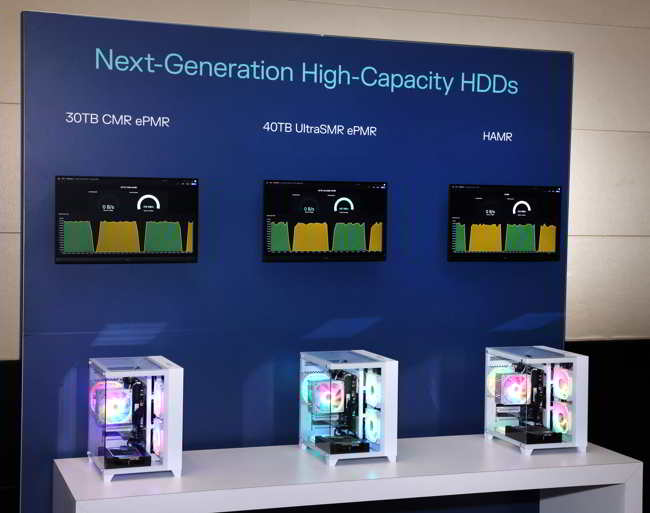
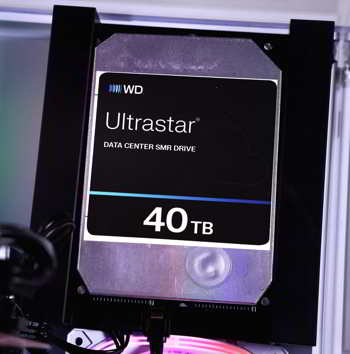 Reinforcing its dual ePMR and HAMR technology leadership approach, the company announced that a world’s highest capacity 40TB UltraSMR ePMR HDD is in qualification with 2 hyperscale customers with volume production planned for the 2nd half of 2026. WD HAMR HDD qualifications are also underway with 2 hyperscale customers with ramp production in 2027.
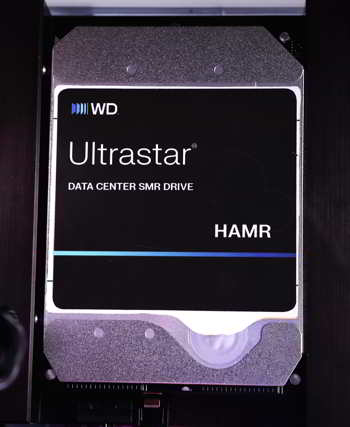
The company will extend ePMR to 60TB by leveraging HAMR innovations without increasing power consumption, while HAMR will scale to 100TB by 2029. This dual-path approach is a critical advantage as both ePMR and HAMR are built on a common architecture, enabling greater manufacturing efficiencies, yields, and a smoother customer product transition.
The result is unprecedented flexibility. Hyperscalers and enterprises can adopt either technology on their own timelines with predictable capacity planning and scaling – no forced technology transitions, no infrastructure disruptions, just continuous and accelerating capacity growth built on architecture they already trust.
HDD Performance Architecture: Closing QLC Flash Gap
Addressing the performance demands of AI workloads, the company introduced 2 industry-first innovations that fundamentally reset HDD performance. These innovations address workloads previously considered flash-only, creating a new performance tier that balances speed and capacity without compromising economics, which is critical as flash faces persistent cost premiums (6-10x vs. HDD) and endurance limitations:

-
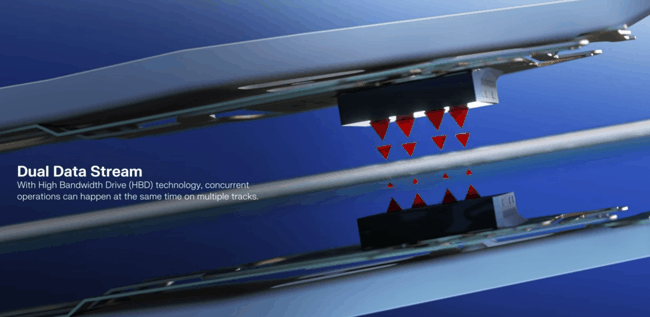
High Bandwidth Drive Technology enables simultaneous reading and writing from multiple heads on multiple tracks delivering up to 2x the bandwidth of conventional HDDs without power penalties. The technology has a clear path to scale up to 8x bandwidth gains and is already in customer hands for validation
-
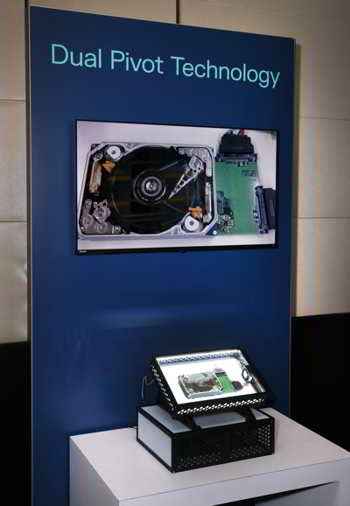
Dual Pivot Technology adds a 2nd set of independently operating actuators on a separate pivot and will deliver up to 2x sequential IO gain within a 3.5-inch drive. This differs from previous dual actuator designs that sacrificed capacity and required extensive customer software changes. Dual Pivot enables reduced spacing between disks, allowing for more platters per drive and higher overall capacity

When combined, these technologies will enable WD to increase sequential IO to 4x overall, delivering 100TB HDDs while maintaining the relative IO/TB rate customers enjoy today. This reduces the need for customers to increase SSD deployment or rearchitect services as capacity scales.
High Bandwidth Drive Technology is already with customers today. HDDs with Dual Pivot Technology are currently in the lab and will become available in 2028.
Power-Optimized HDDs: Bridging Gap Between Warm and Cold AI Data Tiers
AI training and inference is creating massive amounts of valuable cold data that still needs to be accessed in seconds, not hours, rendering this data too active for tape but also too expensive for traditional capacity drives. The firm’s power-optimized HDDs address this challenge with a purposebuilt solution that reduces power consumption, and therefore customer operating costs, while maintaining a sub-second access storage tier with the same 3.5-inch form factor customers use today.
These drives will trade minimal random IO for higher capacity and substantially lower power – an optimal design for cold data – shrinking the gap between warm and cold storage tiers and enabling economically sustainable AI data storage at scale. Power-optimized drives are expected to be in customer qualification in 2027.
Platforms Expansion: Reducing Complexity to Improve Customer Time-to-Value
Understanding that mid-scale customers face hyperscale challenges without hyperscale resources, the company announced the expansion of its platforms business to extend hyperscale storage economics to a broader set of customers. This expansion includes the development of an intelligent software layer, through an open API, expected to launch in 2027, that will enable companies at 200+ PB scale to achieve the same storage efficiency and economics that hyperscalers enjoy today.
This intelligent software layer will accelerate storage innovation adoption across the company’s UltraSMR, ePMR and HAMR HDD, and flash platforms while reducing time-to-production and lowering qualification risk across storage tiers. By simplifying the deployment of storage infrastructure for AI-scale workloads, the firm will transform time-to-value without requiring architectural disruption – giving up-and-coming cloud and enterprise WD customers a clear path to hyperscale economics.
“For the past year, WD has remained continuously focused on execution and accelerating innovation, which has enabled us to truly reimagine the hard drive to meet the requirements of AI,” said Irving Tan, CEO, WD. “Today, we are showcasing innovation that reflects our deep connection to our customers and how we are meeting demand for capacity, scale, quality, enhanced performance, and ease of technology adoption.”
“WD Innovation Day is where our customer-centric business transformation meets our breakthrough technology for the AI era,” said Ahmed Shihab, CPO, WD. “We’ve organized around how customers build and scale AI infrastructure. WD is challenging conventional storage assumptions and removing the complexity and cost barriers that limit their AI-driven growth. Our capacity, performance, power efficiency, and platform innovations solidify our position as the innovation partner for the AI-driven data economy.“
“WD’s Innovation Day revealed a company that has genuinely transformed its strategy around customer infrastructure needs,” said Ed Burns, HDD research director, IDC. “The market validation is already evident – customers are deploying these solutions because WD is solving what matters most for AI infrastructure: reliable capacity at scale, performance that meets demanding workloads, and economics that enable profitability. This customer-centric approach, combined with operational discipline positions WD well in the market going forward.“
(1) One terabyte (TB) is equal to one trillion bytes and one petabyte (PB) is equal to one quadrillion bytes. Actual user capacity may be less due to operating environment.
Resources:
Blog: The Promise of the Performance-Optimized HDD
Blog: The HAMR Future
Blog: Purposeful Progress: Driving Towards the Future with Customer-Centric Innovation
Video: WD High Bandwidth Drive Technology
Blog: WD: Providing the Foundation for the AI-Driven Data Economy
WD Innovation Day 2026 Webcast
WD Innovation Day 2026 presentation
Comments
WD made a major splash with its strategic announcement outlining the future of HDDs during the recent company's Innovation Day.
Click to enlarge
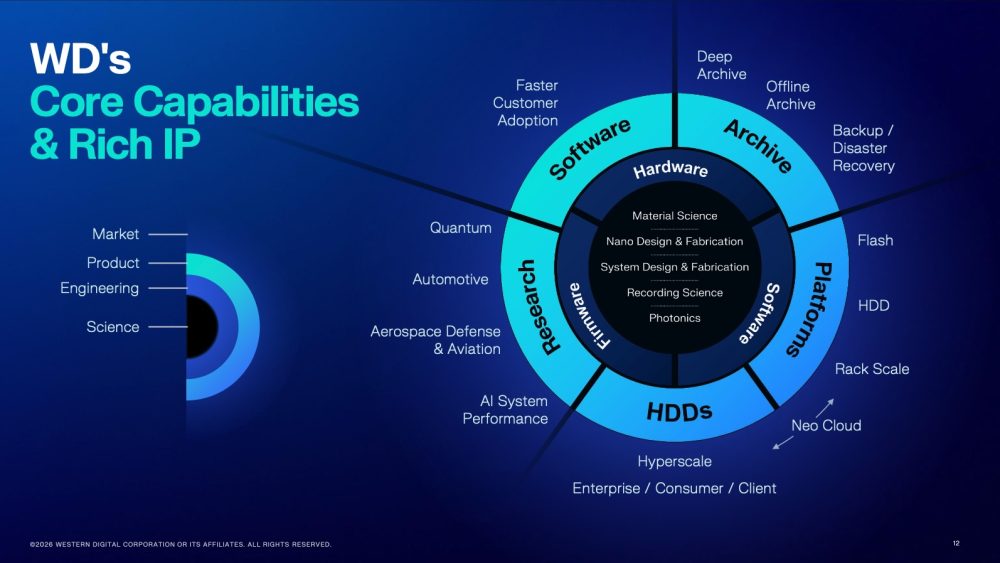
While users weigh capacity, throughput, energy consumption, and cost, the business environment and industry shifts brought on by the AI tsunami have affected all players, particularly those in the HDD space.
Click to enlarge
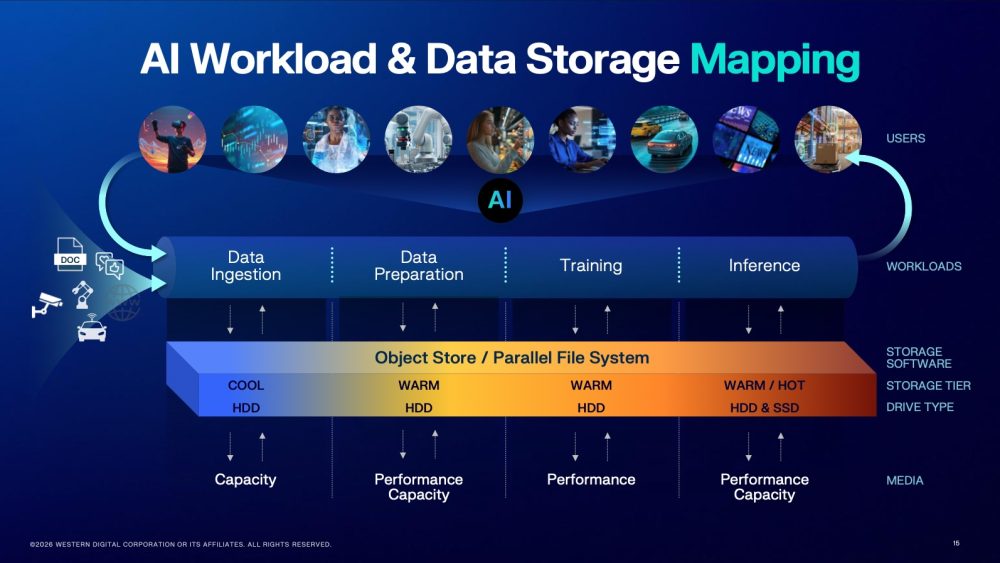
WD's revenue segmentation shows that cloud customers dominate adoption at roughly 90% (89% precisely), while client and consumer segments account for 6% and 5%, respectively. Hyperscalers prioritize cost per terabyte, making HDDs an attractive solution for online random-access workloads. WD's revenue performance over the last fiscal year and recent quarters shows a solid upward trend, and analysts agree the company is on track to deliver approximately $12 billion in revenue this year, representing significant growth.
Despite the higher cost of flash and SSDs, end-user and consumer systems rarely include HDDs except for secondary storage - this reflects current market reality. The recent agreement between Apple and Kioxia underscores this trend: even with a notable price increase, SSDs remain the preferred storage medium for these products.
At the same time, AI is pushing HDD vendors to innovate and accelerate progress in capacity and throughput, as well as in energy efficiency and recording technologies. However, HDDs have already lost the capacity battle to SSDs, which now reach 122TB - roughly four times that of HDDs - and have announced upcoming 245–250TB variants. The second battleground is system footprint, where SSD suppliers aim to deliver exascale racks, something HDDs cannot achieve due to their lower capacity density.
Click to enlarge
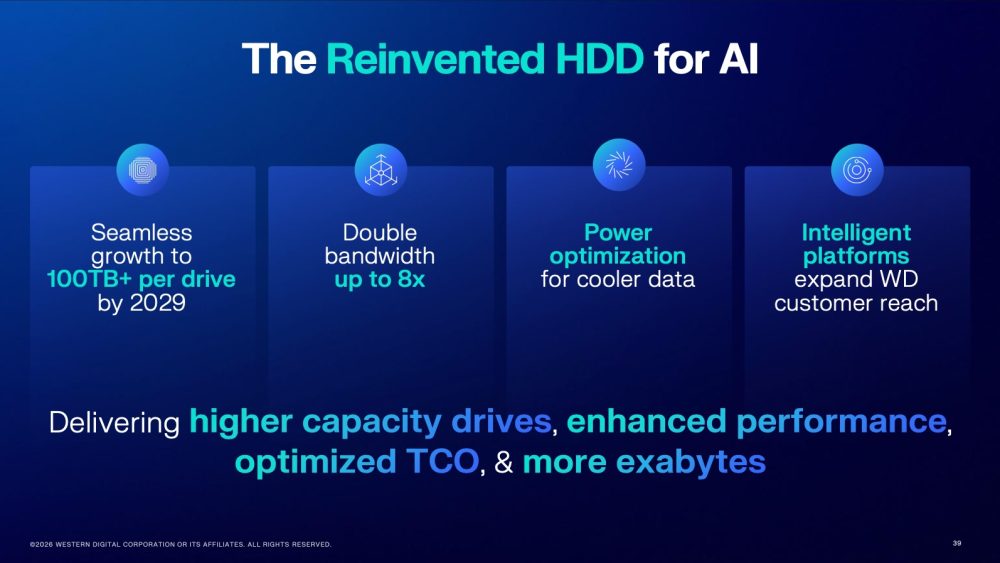
In other words, flash has pushed HDDs into secondary storage, while the most compelling business opportunity now lies in primary storage, driven by AI. This shift is forcing Western Digital to rethink how it can re-enter the primary storage arena, and this research effort is ultimately positive for the broader market. The move is so strategic - particularly following the Sandisk split - that WD has updated its logo to signal the beginning of a "new" era.
The 40TB HDD is nearing readiness and is currently under qualification with two hyperscalers, with volume production planned for the second half of 2026. A similar timeline applies to HAMR technology, though volume production is expected in 2027.
Click to enlarge
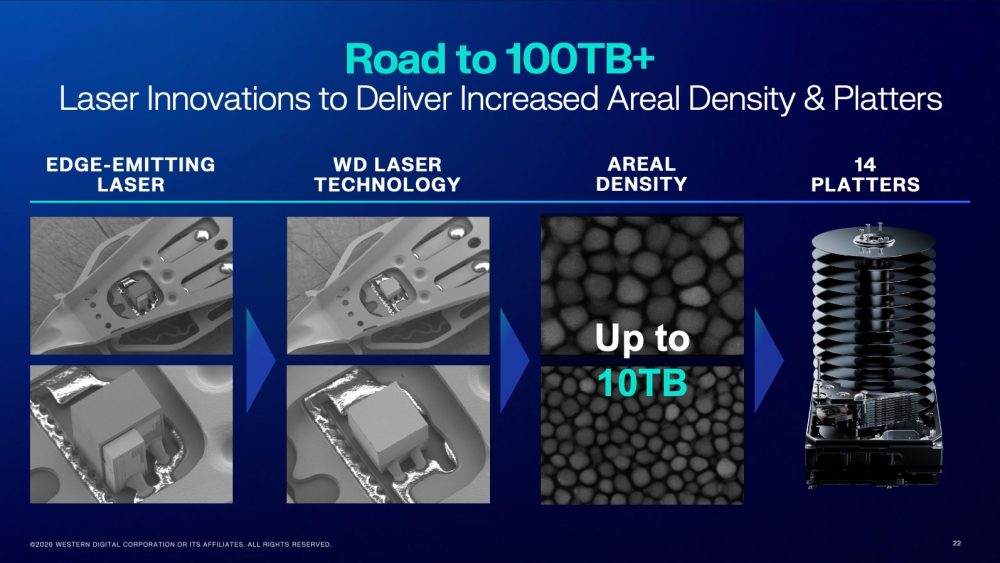
The capacity target is ambitious, aiming for 100TB by 2029. However, if SSD capacity trends continue, petabyte-class SSDs could emerge by then, expanding the capacity gap to roughly 10× compared with about 4× today. Currently, HAMR delivers up to 4TB per platter, and with 11 platters reaches 44TB. Achieving the 100TB goal will rely on further increases in areal density - to 10TB per platter and beyond - as well as configurations with up to 14 platters.
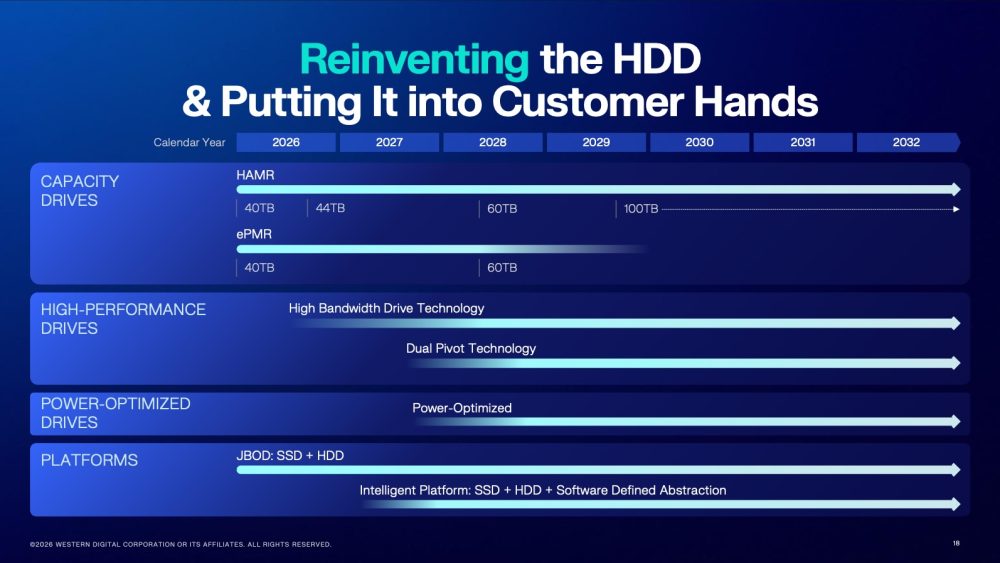
From a performance standpoint, I/O concurrency is reaching a new level, with simultaneous reads and writes across multiple heads and multiple tracks. From a pricing perspective, HDDs continue to hold a clear advantage, creating a significant opportunity. The roadmap is well defined and reinforces the company's technology choices and long-term ambitions.
Click to enlarge







 Subscribe to our free daily newsletter