









DDR5 RDIMM Powers Semiconductor Automatic Optical Inspection (AOI) from Innodisk
AOI systems face 3 core issues that DDR5 RDIMM (registered memory) help to solve: memory bandwidth, accuracy, and high temperatures.
This is a Press Release edited by StorageNewsletter.com on January 6, 2023 at 2:01 pmInnodisk Corporation announced its solution to issues faced by Automated Optical Inspection (AOI) applications relating to, and caused by the shortcomings of consumer DRAM.
DDR5 RDIMM powers semiconductor automatic optical inspection

With the recent launch of the company’s AI, which provides a AI solution for industrial integrators, DDR5 series DRAM plays a key role for a variety of applications, including AOI solutions. With the rise in demand for semiconductors, and the trend towards smaller and smaller processes, the need for automatic systems to detect semiconductor production defects has grown. AOI systems are now used at every step of the semiconductor manufacturing process, and their stability is paramount to production efficiency.
Modern AOI systems face 3 core issues that the firm’s DDR5 RDIMM (registered memory) help to solve: memory bandwidth, accuracy, and high temperatures.
Memory bandwidth
Due to the high memory bandwidth needed for training models, AOI systems often struggle when lower capacity modules are used. Company’s DDR5 RDIMM solves this issue with capacities, including 32 and 64GB modules.
Accuracy
Due to semiconductor processes going down to the nanometer level, the resolution requirement and accuracy requirements for AOI systems has increased. The firm’s DDR5 RDIMM features a dual 40-bit sub-channel architecture, and supports side-band ECC, which can handle AOI’s high-accuracy detection demands.
High temperatures

iCAP screenshot
Click to enlarge

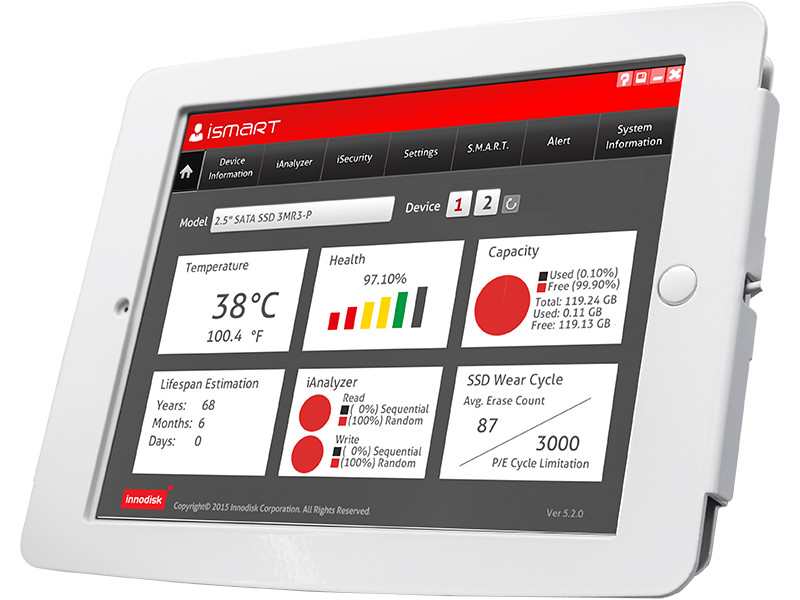
The high-speed and high-precision inspection that AOI systems provide generates high amounts of heat at the DRAM level, and this can cause overall system temperatures to rise sharply. The company‘s DDR5 RDIMM solves these heat concerns via a 2-pronged strategy, involving an integration of both hardware and software. 2 thermal sensors on the modules detect ambient temperatures, and 2 software tools: iCAP (Innodisk Cloud Administration Platform), and iSMART monitor temperatures and send warning messages.
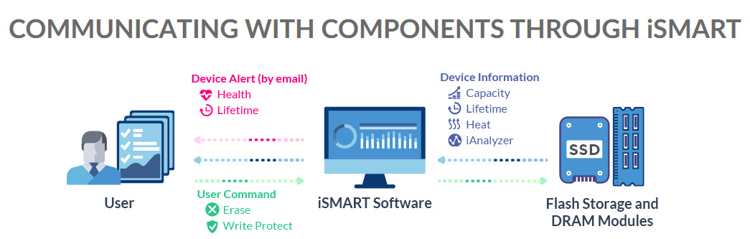
iSMART screenshot
Click to enlarge
Although memory technology is constantly being updated, the company’s observation of the industry’s current situation shows that customers’ demands for new technologies vary greatly. Therefore, Innodisk provides the most complete industrial-grade DDR5 and DDR4 products, and also legacy products such as DDR3, DDR2, DDR and SDRAM. These memory modules will continue to be supplied with stable pricing, original IC, and the same longevity support as all the firm’s products.








 Subscribe to our free daily newsletter