




90% of Application Performance Issues Caused by Poor Performing Storage
Two-year study by Kaminario
This is a Press Release edited by StorageNewsletter.com on August 13, 2013 at 3:06 pmKaminario, Inc. announced the findings from its two-year-long Storage Performance Report.
After collecting data from 200+ organizations worldwide, the study found storage continues to be the number-one cause of poor application performance across today’s enterprises. The study confirms the growing need for enterprises to improve the efficiency and productivity of IT infrastructures by addressing their storage performance issues.
"When it comes to ensuring that mission-critical applications are meeting SLA’s, performance and reliability are the two most important factors for any company," said George Crump, analyst, Storage Switzerland. "The issues Kaminario’s Storage Performance Report identified as the main roadblocks to achieving these goals are consistent with our own studies of what storage solutions must do to ensure optimal application performance in the data center. For example too much attention is spent on IO/s and not enough on reliability and scalability. These results are a clear indication that for most companies, there is still work to be done to maximize the productivity of their IT systems."
Results came from more than 200 performance assessments collected from mid-size enterprises across industries, 90% of those using legacy storage solutions while the other 10% were using hybrid HDD and flash storage. The participants were asked to provide performance data from their database during a peak period of time. In order to determine the root cause of participant’s performance bottlenecks, Kaminario analyzed wait times for database applications including Oracle, SQL Server, DB2,MySQL, and unstructured datasets.
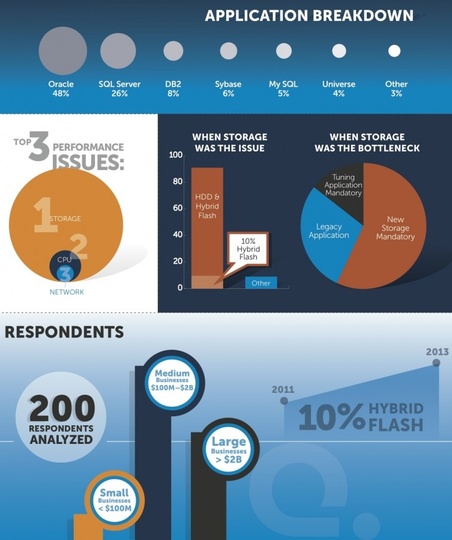
At the conclusion of the analysis, Kaminario found 90% of all application performance issues were tied directly to excessive storage use. It found companies experienced difficulty with OLTP and OLAP) tied to latency and/or bandwidth, both in physical and virtual environments. These issues were particularly typical due to the high demand on storage to random R/W not optimized by legacy HDD arrays. Ultimately these high demands led to slow response times for batch and ETL processing, which beleaguered user activity. The study also revealed that because most applications tend to read and write from the same block, a storage solution’s ability to support redo logs and temp files was crucial to ensuring there was no degradation in performance.
"If a company’s database applications are accessing data from slow storage it will have an adverse impact on their business SLAs, ultimately resulting in lost revenue," said Dani Golan, CEO, Kaminario. "Customers understand that to remain competitive means they need resilient, high performing storage. The results of this study validate the industry’s rapid growth in all-flash storage solutions, and underscore the requirement for consistent 3D performance across IO/s, bandwidth and latency. It’s not just about IO/s in today’s data centers."








 Subscribe to our free daily newsletter