




Social Media Company Massive Media Selects Caringo Rather Than Amplidata
To store and serve millions of photos on NetLog and Twoo
This is a Press Release edited by StorageNewsletter.com on June 20, 2013 at 3:00 pm
Caringo, Inc., a provider of object
storage software, announced that social media company Massive Media has been utilizing a
storage infrastructure built atop Caringo CAStor’ for the past year to store and serve millions of photos end users upload to its social networking
service Netlog and its social discovery platform Twoo.
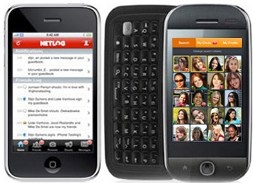
Netlog is an online community of more than 110 million members that allows
users to create their own web page with a blog, pictures, videos, events,
playlists and more to share among their friends. Twoo is the largest social
discovery site in the world, according to ComScore,
Inc. personals, and attracts nearly 10 million monthly unique visitors
interested in utilizing the site’s matchmaking algorithms to help
them meet new people. Combined, the two sites have generated over 600 million
thumbnails and photographs. With users currently uploading more than a million
additional objects a day, the capacity requirements of Massive Media’s network
are expected to double every two years.
Massive Media initially launched with a self-designed storage system then
switched to MogileFS, neither of which provided the scalability the company
needed. A move to a solution by Amplidata
also didn’t work well as the sites grew. That is when Massive Media turned to
Caringo to provide the capacity, performance and scalability that it needed.
"At first, everything was going OK
with our previous storage, but as we grew, it started to have its hiccups,"
said Nicolas Van Eenaeme, director of technology, Massive Media. "Also,
there was a huge storage overhead in the previous systems we used and all of
them had in one way or another single point of failure. The software design of CAStor is really
superb. The shared-nothing architecture
is great. The performance is also outstanding.
And it scales very well. If you
need more throughput or storage, you just add more nodes. It’s clear that CAStor is a winner."
Massive Media stores each object multiple times
on three clusters:
- cluster 1
consists of 60 nodes on 30 physical servers, and 7,200rpm SATA drives; - cluster
2 consists of 32 nodes with SSDs; and - cluster 3 consists of 42 nodes, with
7,200rpm drives.
Nodes in each cluster are interconnected with 1GbE
connections.
The company needed a solution that could match the throughput and performance
requirements of hundreds of concurrent reads, writes and deletes per second.
Software updates had to be done with no overall system downtime. Recovery time
of a single node had to be less than a day. And, it needed to provide linear scalability in terms of storage
capacity with near-linear scale in terms of throughput capacity.
Van Eenaeme said he appreciated CAStor’s ease of setup and integration, which
took only hours before everything was up and running. He also liked flexible, pay-as-you-grow licensing model, which
eliminated the requirement for huge upfront investment costs and helped satisfy
the company’s need to provide continued growth while containing costs.
Massive
Media is now migrating all of its legacy storage to Caringo.
"The explosion in content created by
social media requires a solution that provides organizations like Massive Media
the means to cost effectively manage millions of objects per day, all of
variable sizes," said Mark Goros, CEO, Caringo. "Our object storage software, powered by
CAStor, makes it easy to manage the massive scalability requirements of social
media to meet even the most-demanding storage challenges. By offering plug-and-play scalability for
both capacity and performance, CAStor allows Massive Media to stop worrying
about managing its infrastructure and allows it to focus on providing the best
photo-sharing capabilities for its websites."








 Subscribe to our free daily newsletter