









Recap ISC 2026
Confirming its role in the HPC ecosystem and now in AI within Europe
By Philippe Nicolas | July 14, 2026 at 2:01 pmEvery year, the HPC, and now AI, community converges on Hamburg, Germany, to showcase developments, share project updates, and get briefed on the latest technologies at the ISC conference.
 Once again, the event drew several thousand attendees, with a strong lineup of sponsors, exhibitors, and conference sessions.
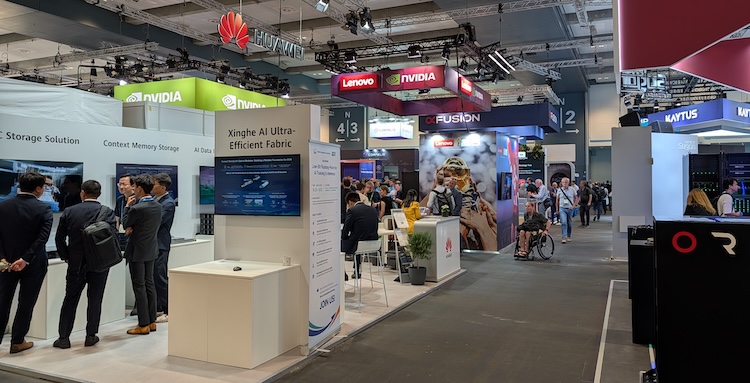
Among the topics that stood out this year were the convergence of HPC, AI, and quantum computing; AI at scale, particularly inference across multiple dimensions; energy-efficient computing with advanced cooling techniques; data infrastructure and services; and, as always, networking and high-speed interconnects.
During the conference, the TOP500 and its companion IO500 ranking were unveiled, revealing some notable shifts. Most visibly, LineShine, deployed in Shenzhen, China, now holds the top spot.
Presentations and exhibitor activity once again confirmed AI’s status as a premier HPC workload, injecting fresh momentum into HPC vendors and their associated technologies. Many sessions focused on consolidating AI and HPC configurations and workloads within shared environments, largely driven by cost considerations. Several quantum computing companies echoed the same sentiment: AI, HPC, and quantum now form the top three priorities.
On the storage side, a number of vendors are riding the renewed interest in tiering, spurred by steep SSD pricing. This dynamic is also reinforcing the continued relevance of HDDs, with three vendors, Seagate, Toshiba, and WD, present on the show floor. KV cache was heavily promoted by storage companies as a way to enable efficient inference, a topic that’s increasingly overshadowing training in conversations. Edge AI also had a presence, with several dedicated boards on display at select booths. Meanwhile, only a handful of SSD and flash vendors exhibited, including Kioxia, Samsung, Micron, and Dapustor.
Since data sits at the center of this new AI era, several vendors promoted data cataloging and global data access solutions aimed at enabling compute-in-place, as data volume remains a real obstacle to movement and migration. We expect additional storage players to stake a claim in this space in the coming months, further confirming the ongoing convergence between storage and data management. On the data management front, Arcitecta, Atempo, DDN, Globus, Grau Data, Nodeum, PoINT, QStar, Quantum, and Starfish were especially visible and we can add Xinnor. File (BeeGFS, DataCore, DDN, Everpure, Hammerspace, Leil, QNAP, Quantum, Quobyte, Vast Data, Vdura and Weka) and object storage (DataCore, DDN, Everpure, MinIO, PoINT, Quantum, Spectra Logic and Vast Data) also had a strong presence, spanning both proprietary and open-source approaches such as Lustre and DAOS, featuring client-side caching, erasure coding, and various flavors of parallel data distribution. Tape also deserves a mention, with BDT, Qualstar, Quantum, and Spectra Logic in attendance.
This all reaffirms storage’s role as a core building block across different configuration levels, and the upcoming SC conference in November will likely build further on developments shown in Hamburg.
Sovereignty was another prominent theme, though understood differently depending on who you ask. It remains a particularly hot topic in Europe, where there’s a push to chart an independent course on certain key technologies.
Click to enlarge
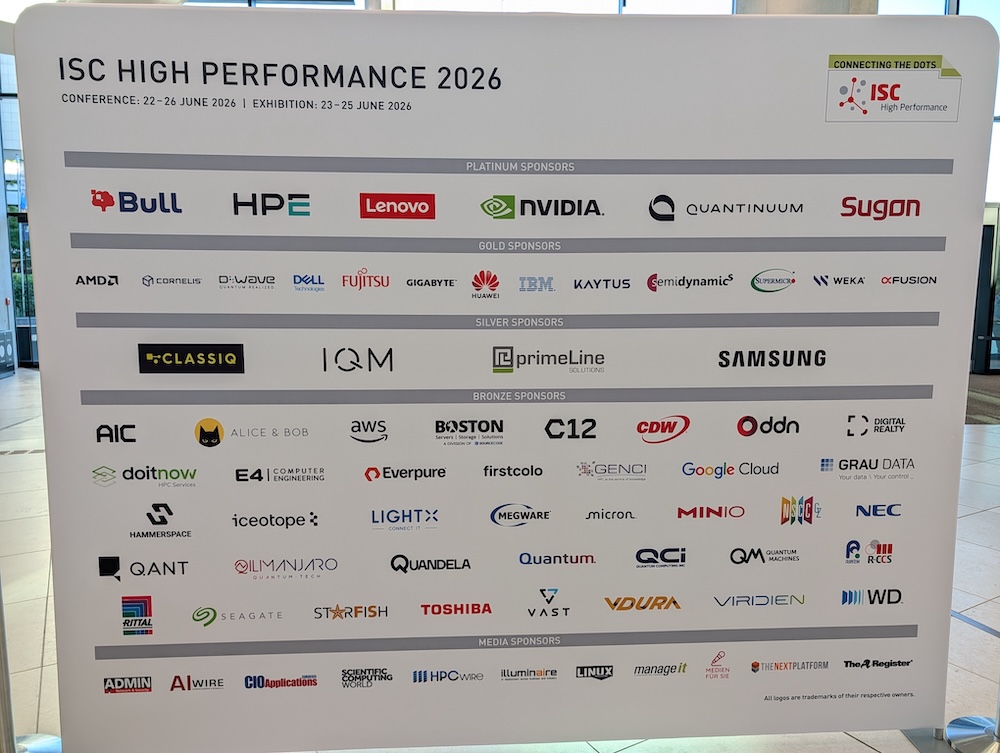
Despite strong industry turnout overall, we noted the absence of booths from Astera Labs, BiWin, Broadcom, Cisco, Cloudian, d-Matrix, Exelera AI, FADU, Fujifilm, FuriosaAI, Graid, Hitachi Vantara, Intel, iRods, Lightbits Labs, Liqid, Marvell, MaxLinear, Microchip, NetApp, Peak:AIO, Pegatron, Pliops, QCT, Qumulo, Rebellions, Sandisk, Scaleflux, Scality, SK hynix, Silicon Motion, Solidigm, SUSE, Swissbit, Tuxera, Unifabrix, Versity, and XSight.
Several companies used the conference as an opportunity to unveil new initiatives, partnerships, and products, including DDN, Vast, Vdura, Cornelis, QStar, and ThinkParQ:
- ISC 2026: The 67th Edition of the TOP500 List of the World’s Most Powerful Supercomputers Unveiled in Hamburg
- ISC 2026: Sugon Showcased in Europe, Tops the IO500
- ISC 2026: Cornelis and NextSilicon to Build Joint Reference Architectures for AI and HPC
- ISC 2026: DDN Unveils Next-Generation AI & HPC Data Intelligence Innovations, Redefining Performance, Efficiency, Security, and Scale for Enterprise AI Factories
- ISC 2026: Vast Data Powers Aalborg University’s AI Research Cloud with Advania Danmark
- ISC 2026: Vdura Unveils Next-Generation Control Plane and Advanced S3 Capabilities for AI and HPC
- ISC 2026: Toshiba Demonstrated Storage Infrastructure for Scientific AI and Research
- ISC 2026: QStar Integrates with BeeGFS to Reduce Storage Costs Through Intelligent Archiving
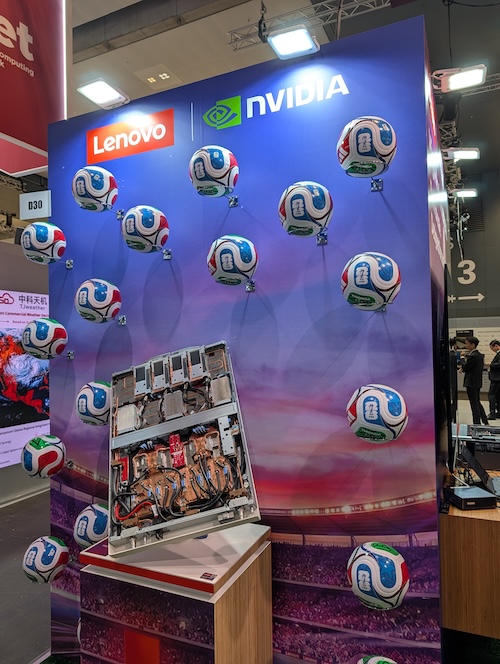
Yet even as AI has cemented its presence and shaken up HPC’s traditionally conservative positioning, the event still seems to be struggling to move beyond its HPC roots. We’d encourage organizers to reflect on this, especially as new-format events emerge quickly, the recent RAISE Summit in Paris, for instance, drew a noticeably different attendee profile and featured exhibitors not typically seen at ISC.
The next edition, ISC 2027, will take place in Hamburg, Germany, from June 7 to 11, 2027.







 Subscribe to our free daily newsletter