




Proton Releases Drive CLI for Windows, macOS and Linux
The CLI brings the power of our cloud storage and end-to-end encryption to scripts, backups, and deployment pipelines without the hassle of writing code
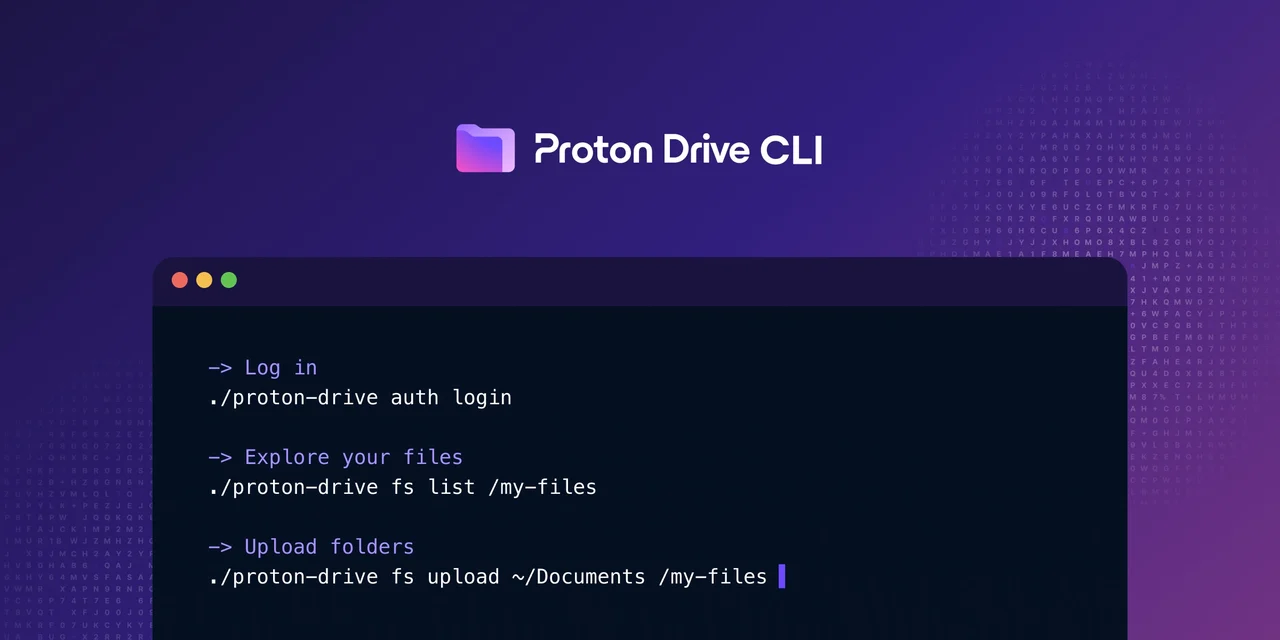
This is a Press Release edited by StorageNewsletter.com on July 10, 2026 at 2:00 pmProton AG has released a command-line interface (CLI) for its end-to-end encrypted Proton Drive cloud storage service, available for Windows, macOS and Linux. The tool, announced on June 9, 2026, allows users to run Drive operations – uploading, downloading, listing and managing files and folders, trash handling, sharing and invitations – directly from a terminal, and to integrate them into scripts, backup jobs, cron schedules and deployment pipelines without writing custom code vs. Drive’s internals.
Built on shared SDK
The CLI is built on the Proton Drive SDK, the shared engine the Swiss company finished rolling out across its official Drive applications the previous week. The SDK consolidates what were previously separate per-platform implementations (Windows, macOS, iOS, Android and web) into a single codebase, and the CLI is fully interoperable with the official client applications.
According to the company, the SDK migration also delivered performance gains in existing clients: uploads up to 3× faster, downloads up to 2× faster and file encryption up to 4× faster.
The firm positions the CLI as a complement to its desktop applications rather than a replacement, only the applications include a full background synchronization engine. The CLI is designed for point-in-time operations: publishing files after a build or release, snapshotting a shared folder before an audit, or revoking access when an employee leaves.
Operation
The CLI ships as a single binary. Output is plain text by default, with a --json flag for machine-readable results suitable for automation. Authentication is handled through the browser – no passwords are passed on the command line – and sessions are stored in the operating system’s credential store (Windows Credential Manager, macOS Keychain, or libsecret on Linux). All operations are protected by the same end-to-end encryption as the rest of the Proton Drive service.
The tool is written in TypeScript and packaged with Bun. Pre-built binaries are available from the company’s download page, and the source is published in the MIT-licensed Drive SDK repository on GitHub.
At launch, the CLI covers authentication, file and folder management including trash, and sharing/invitations. Planned additions include support for photos and albums, public-link shares, and multi-account operation aimed at larger teams and managed service providers. The company states its long-term goal is full parity between the CLI and the Drive applications.
The CLI is subject to the same fair-use policies as other Proton Drive clients; accounts generating unusually high traffic are temporarily throttled.
Linux client in development
The release lands as the vendor works on a native Proton Drive desktop client for Linux, confirmed in its June 2026 SDK update and built “from the ground up” on the same SDK. Proton Drive has offered a Windows desktop client since July 2023 and a macOS client since November 2023, while Linux users have so far been limited to the web application; no release date for the Linux client has been announced. Until it arrives, the CLI gives Linux users their first official native tooling for the service.
Proton Drive offers 5GB of encrypted storage on its free tier, with paid consumer and business plans providing larger capacities. It also offers a business cloud storage option for organizations who wish to make use of the tool.








 Subscribe to our free daily newsletter