









From Kioxia, Software-Enabled Flash Technology to Redefines Hyperscale Digital Storage
Combines software flexibility, host control and flash native semantics into flash native API and purpose-built controller.
This is a Press Release edited by StorageNewsletter.com on May 8, 2020 at 2:28 pmKioxia America, Inc. (formerly Toshiba Memory America, Inc.) announced the introduction of Software-Enabled Flash (SEF), a technology that combines software flexibility, host control and flash native semantics into a flash native API and purpose-built controller.
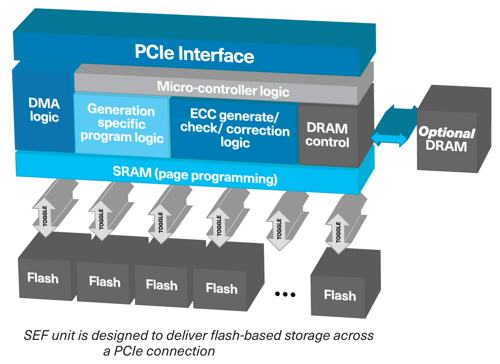
Targeted to data center directors, architects and developers, SEF technology makes flash easier to manage, more timely to deploy and more predictable in nature – putting the power in programmers’ hands.
With hyperscale computing redefining storage and virtualization, the race is on to orchestrate digital storage for cloud applications in a way that drives efficiency at scale. Effectively and efficiently utilizing flash for stable, predictable latency in changing cloud workloads through direct host management of flash will be critical to realizing these much-needed efficiencies.
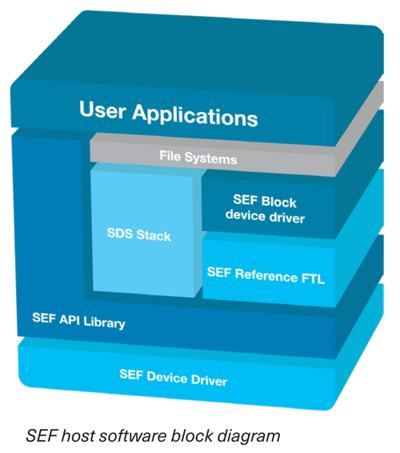
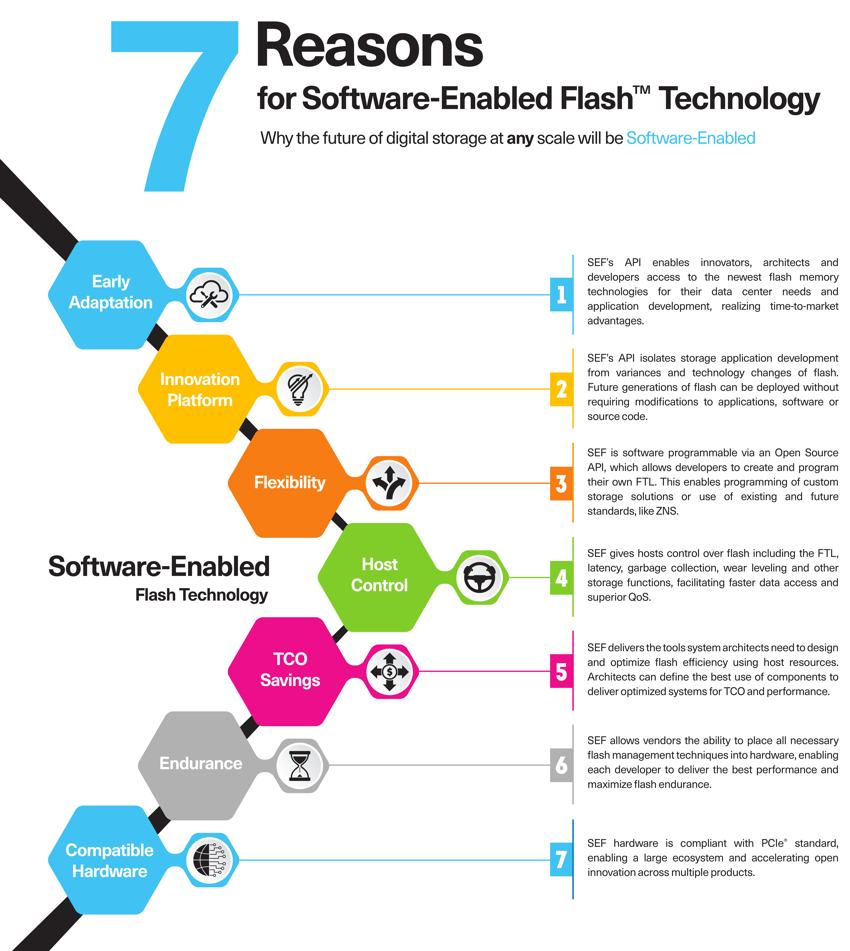
Past efforts to provide a market solution for hyperscalers have not been widely adopted, as these attempts have all been extensions of the HDD paradigm. Taking a different approach, the company designed SEF to free developers from narrowly defined ‘drive’ behaviors by changing the relationship between solid-state storage and the host in cloud environments. SEF bypasses legacy HDD storage paradigms to unlock true host control and enable the use of flash at its natural speed.
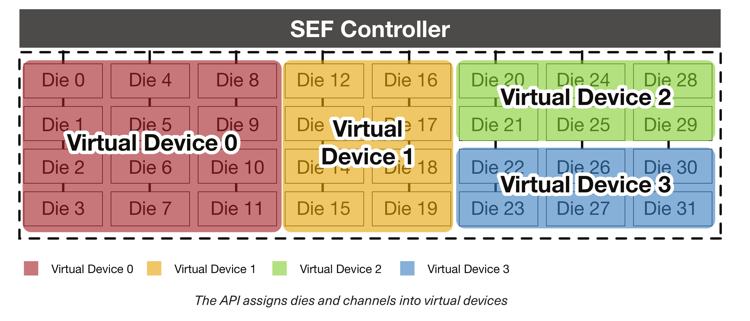
Additionally, SEF enables architects to maximize the benefits of their investments in solid state storage, including the ability to freely and flexibly define storage behaviors between the host and the flash. The API abstracts genal differences, eliminating the need for developers to modify code with each new version of flash.
“As the inventor of flash memory, Kioxia is perfectly positioned to introduce this game-changing approach to deploying flash at scale,” noted Eric Ries, SVP, memory storage strategy division (MSSD). “Our customers have been pushing for the ability to drive operational efficiency in the data center programmatically, and SEF technology will meet this need by placing access and control of flash directly in the hands of hyperscale programmers.“
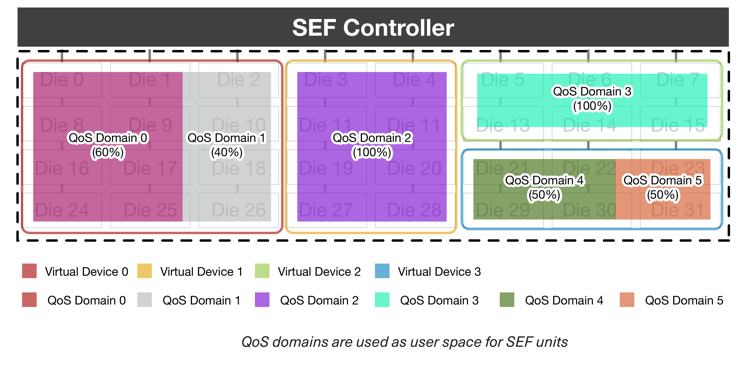
SEF hardware is compliant with PCIe standards, enabling a large ecosystem and accelerating open innovation across multiple products.
Click to enlarge
Resources:
Introducing Software-Enabled Flash (SEF) Technology
7 Reasons for Software-Enabled Flash Technology (Infographic)
Read also:
Kioxia Enhanced KumoScale Storage Software Based on NVMe-oF to Include Kubernetes CSI-Compliant Snapshots and Clones
Addition of storage functions enables software to reduce time pressures associated with backup processes for large, stateful applications such as databases – while consuming little storage space.
May 1, 2020 | Press Release
Kioxia Expands KumoScale Software Suite With Resilient Provisioner Service
Enables NVMe-oF deployment at scale by federating KumoScale storage nodes across data center.
March 6, 2020 | Press Release







 Subscribe to our free daily newsletter