









Australian Chris O’Brien Lifehouse Hospital Deploys SIOS DataKeeper
To ensure HA in AWS cloud
This is a Press Release edited by StorageNewsletter.com on May 5, 2020 at 2:21 pmSIOS Technology Corp. announced that Chris O’Brien Lifehouse is using SIOS DataKeeper to take advantage of the economies of scale afforded in the AWS cloud without sacrificing uptime or performance.
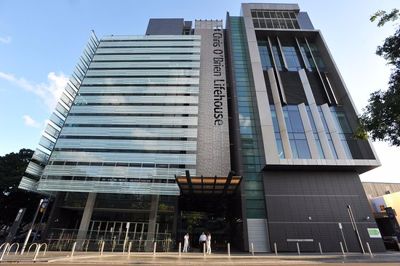
Chris O’Brien Lifehouse is one of Australia’s largest clinical trial centres specialising in treatment and research for patients who are suffering from rare and complex cancer cases. The not-for-profit hospital sees more than 40,000 patients annually for screening, diagnosis and treatment.
Lifehouse uses the Meditech healthcare system, which stores the electronic health records for all patients in a database.
“The health information system and database are vital to the care we provide, and if either goes down, patient records would not be accessible, and that would paralyse the hospital’s operations,” explained Peter Singer, director IT, Lifehouse.
In the hospital’s datacentre, mission-critical uptime has been provided by Windows Server Failover Clustering (WSFC) running on a SAN. But like many organisations, Lifehouse wanted to migrate to the cloud to take advantage of its agility and affordability.
Performance Problems Persist for Critical Applications in Cloud
Lifehouse chose AWS as its cloud service provider, and had hoped to lift and shift its environment directly to the AWS cloud. To simulate its on-premises configuration, Singer chose a cloud volumes service available in the AWS marketplace, however, it had a substantial adverse impact on throughput performance. With so many elements and layers involved, performance problems are notoriously difficult to troubleshoot in software-defined configurations deployed in the cloud. With the No Protection option specified, the cloud volumes performed well. But No Protection was not really an option for the mission-critical Meditech application and its database.
“We made every reasonable effort to find and fix the root cause, and eventually concluded that SDS would never be able to deliver the throughput performance we needed,” Singer recalled.
So the IT team at Lifehouse began looking for another solution.
In its search for providing both HA and performance, it established 3 criteria: validation for use in the AWS cloud to minimise risk associated with using a third-party solution in the cloud; the ability to work across multiple availability zones would assure BC in the event an entire AWS data centre was impacted by a localised disaster; and performance that was as good as or better than what had been achieved on-premises.
SIOS DataKeeper Cluster Edition emerged as the choice because it was available on the AWS marketplace, which assured it was proven to operate reliably in the AWS cloud. And because it did not use SDS, Singer was confident DataKeeper would be able to deliver the performance, synchronous data replication that he needed.
Providing Performance, Synchronous Data Replication
By using real-time, block-level data mirroring between the local storage attached to all active and standby instances, DataKeeper overcomes the problems caused by the lack of a SAN in the cloud, including the poor performance that often plagues SDS. The resulting SANless cluster is compatible with Windows Server Failover Clustering, provides continuous monitoring for detecting failures at the application and database levels, and offers configurable policies for failover and failback.
Lifehouse has 8 instances in SANless failover clusters to support its Meditech application and database. Some of those instances are in different AWS availability zones to protect vs. widespread disasters. The latency inherent across the long distances involved normally requires the use of asynchronous data replication to avoid delaying commits to the active instance of the database. But the real-time, block level data mirroring technology used in DataKeeper still enabled Singer to achieve a near-zero recovery point.
Unlike software-defined shared storage, DataKeeper is purpose-built for HA, so it came as no surprise to Singer that the cloud-based configuration worked as needed. What was a bit surprising was just how easy the solution has been to implement and operate.
“We were able to go from testing to production in a matter of days. Ongoing maintenance is also quite easy, which we expect will minimise our operational expenditures associated with HA and DR. If it were not for SIOS, we might not have been able to migrate our environment to the cloud,” Singer concluded.
“DataKeeper enabled Lifehouse to take full advantage of the economies of scale afforded in the cloud without sacrificing uptime or performance,” said Frank Jablonski, VP, global marketing, SIOS. “Migrating mission critical applications to the cloud requires planning for both HA and performance. SIOS helps companies like Lifehouse ensure both.“







 Subscribe to our free daily newsletter