








Sanbolic Enhancing Melio to V5.5
Supports storage hardware agnostic scale-out, data protection, SLA management.
This is a Press Release edited by StorageNewsletter.com on November 11, 2013 at 2:11 pmSanbolic, Inc. announced the availability of Melio Release 5.5, an enhanced version of the company’s software-defined data acceleration platform.
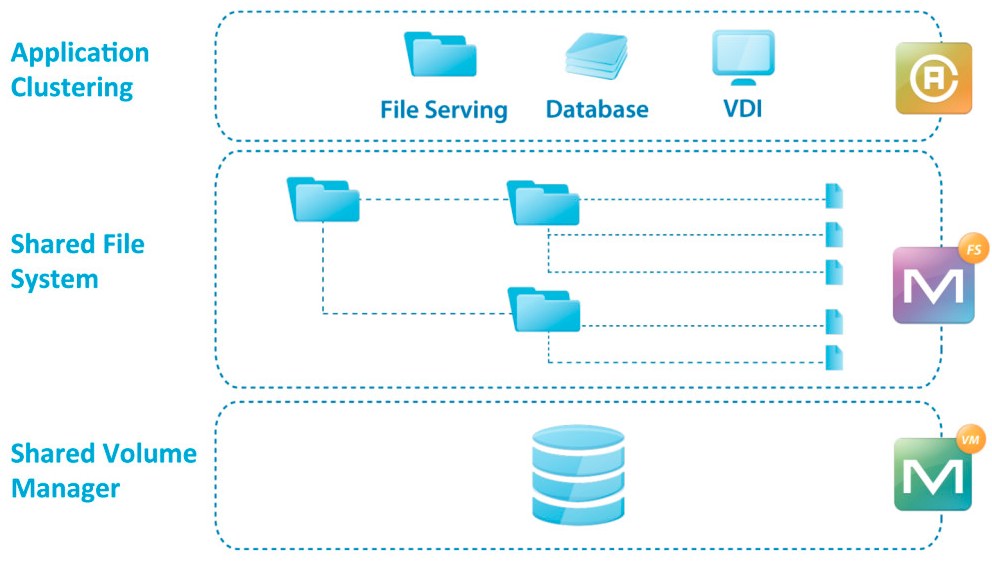
Melio5.5 supports massive-scale distributed storage architectures and introduces new enterprise features designed to optimize and enable scale-out of solid state and flash memory usage. It also adds support for WORM devices in cross-datacenter, geo-distributed applications.
Using the Melio5.5 software with commodity server and storage hardware (e.g. PCIe flash, SDD, HDD), organizations can create storage systems that meet tier 1 requirements for data management, data protection, performance and scale-with economics resembling the the world’s largest and most efficient cloud data centers. By implementing Sanbolic’s platform and approach, enterprises can save millions of dollars in operating and capital expenses.
“Sanbolic Melio has been delivering production hardened effective and highly efficient comprehensive storage software stacks for over a decade. The latest Melio release raises the bar in scale-out performance, simplicity, manageability and capacity,” said Marc Staimer, founder and principal analyst, Dragon Slayer Consulting. “Sanbolic Melio’s complete embrace of commodity servers and storage media creates the Enterprise and cloud class storage users are demanding, but at a TCO they can afford.”
New Features
The economics of flash have limited its use to primarily serving as an acceleration platform for databases. New capabilities in Melio5.5 enable enterprises to reap the performance benefits of flash for a broader set of applications. The software combines world-class data and storage management capabilities across legacy storage and flash devices – at the host layer – as well as intelligent data placement. As a result, enterprises are able to balance ‘price to capacity’ ratios in ways that have never before been possible. By offering this approach, Melio5.5 creates a larger total available market for flash adoption.
Updated version also delivers enhancements in following areas:
- QoS: automatically applied, cluster-wide ratios for I/Os to the actual shared storage hardware based on rules over file path and process name, allowing IT departments to specify and guarantee SLA’s for machines, workloads and applications.
- WORM: WORM support with ensures that information, once written, cannot be deleted or modified. Melio5.5 also features new writable snapshots which allow for running analytics and non-clustered applications over the same data.
- Dynamic volume expansion, and node and storage scale-out.
- Mirroring: RAID-1/10 is now on-line split-able to enable better storage live migration and cloning.
- Intelligent data placement: auto-detects flash and SSD storage to allow for static and per-file, rule-based tiering of user data.
“The new features and enhancements built into Melio5.5 all boil down to one thing-helping organizations solve their data problems, not just storage infrastructure dilemmas,” said Momchil Michailov, CEO, Sanbolic. “Our software-defined data acceleration platform eliminates the bottlenecks between applications and data to make that data more accessible, agile and useful. Because Melio is infrastructure agnostic, it can intelligently orchestrate storage and optimize the management of data across all devices and environments.”
Sanbolic also announced that the U.S. Patent and Trademark Office has granted the company two new patents: U.S. patent numbers 8,073,881 and 8,364,726.
The first patent addresses the deficiencies that conventional applications have in allowing access (or lack thereof) to files in a shared storage system via a single dedicated server device. The technology gives organizations the agility and flexibility to dynamically create clusters using non-uniform industry standard x86 servers. This enables more reliable and much simpler administration because any server can access shared data the moment the hardware allows for it, and supports a rolling upgrade of commodity server and storage hardware. All of this ensures that even if one or more components fail, as is common with software-defined storage, an organization’s systems will not go down.
The second patent addresses systems scale-out. Melio supports up to 2,048 nodes and 65,000 storage devices per server cluster. Its distributed lock manager technology is fully symmetrical and all machines in a cluster are lock servers to ensure that no server ever becomes a bottleneck. In the approach, locks change ownership over the network and only the previous owners of the lock can participate in communication-reducing network traffic to an absolute minimum, enabling efficient and high performing scale-out in hundreds of nodes.
The Melio5.5 software-defined data acceleration platform is available.







 Subscribe to our free daily newsletter